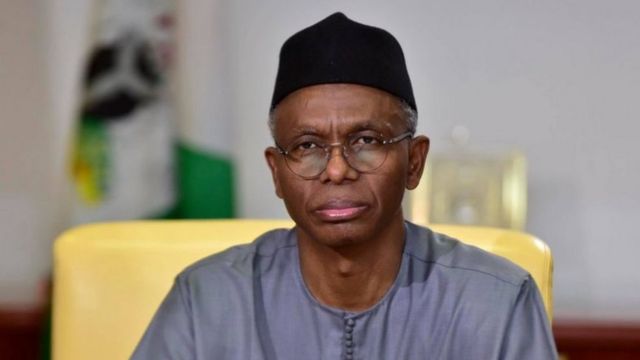
The Independent Corrupt Practices and Other Related Offences Commission (ICPC) on Monday outlined documents and electronic devices allegedly seized from the Abuja home of former Kaduna State Governor Nasir El-Rufai.
The disclosures were contained in court filings submitted before the Federal Capital Territory High Court in opposition to a N1bn fundamental rights enforcement suit filed by the ex-governor. El-Rufai had challenged what he described as his unlawful arrest, detention, and the search of his residence last month.
In its response, the ICPC urged the court to dismiss the suit, stating that its operatives acted under a valid search warrant issued on February 18 and executed the following day between 1:37 p.m. and 3:56 p.m. at his residence in Asokoro, Abuja.
According to the commission, the operation was conducted alongside personnel of the Nigeria Police Force and was witnessed by El-Rufai’s wife, Hadiza El-Rufai, and his son, Mohammed El-Rufai.
The anti-graft agency listed several items allegedly recovered during the search, including investor account statements, asset declaration forms, business registration certificates, corporate compliance documents, Know-Your-Customer files, and records relating to domestic and foreign loans approved by the Kaduna State House of Assembly between 2015 and 2023. Interim investigation reports allegedly linking El-Rufai and associates were also cited.
Other materials said to have been seized include Ecobank Nigeria Plc share certificates, land and property documents, deeds of assignment, valuation reports, Powers of Attorney, Afri-Venture Capital Company records, payment mandates, and media materials from the former governor’s office.
The ICPC further stated that electronic devices recovered comprised nine flash drives, a memory card, seven hard drives, multiple laptops — including Apple MacBook Pro and Elumac Book Pro models — as well as mobile phones of various brands, 18 additional devices, and a Remarkable tablet with chargers. The commission said all items were documented, sealed, and prepared for forensic examination.
It added that a Device Documentation Form captured serial numbers, storage details, and accessories of the gadgets, noting that the exercise was witnessed by family members and other individuals present. The ICPC acknowledged that El-Rufai indicated in the documentation that he did not grant consent for access to the devices.
The commission maintained that the materials would undergo forensic analysis as part of ongoing investigations into alleged corruption and asset concealment.
Reacting in a statement signed by his son, Bello El-Rufai, a member of the House of Representatives, the former governor accused the commission of attempting to criminalise his silence during interrogation.
“Charge me, if you have anything against me. You have had more than two years to investigate me. Take me to court, please,” the statement quoted him as saying.
The family argued that his silence was a constitutional right and not proof of wrongdoing, describing attempts to draw adverse inferences as reflecting an “inquisitorial mindset.” They also disputed the scope of the items seized, insisting that only personal effects, including old mobile phones and storage devices, were taken.
They further alleged that the search warrant was invalid and fraudulently obtained, adding that their lawyers had challenged its legality in court.
Since leaving office in 2023, El-Rufai has faced multiple investigations. In 2024, the Kaduna State House of Assembly called for a probe into the alleged diversion of N423 billion during his tenure. He has also previously been questioned by security and anti-corruption agencies.
The ICPC, however, maintained that its actions were lawful and consistent with its statutory mandate to investigate corruption and related offences.