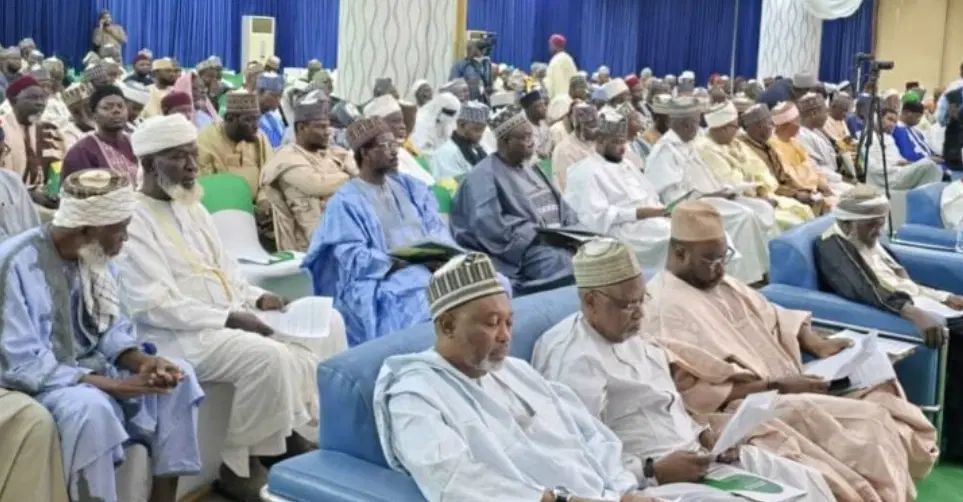
The Supreme Council for Shariah in Nigeria (SCSN) has firmly rejected calls by U.S. lawmakers seeking an end to the practice of Sharia law in the country, describing the move as misguided and an infringement on Nigeria’s sovereignty.
In a statement issued Wednesday, the council said Sharia remains a constitutionally protected legal and moral framework for Muslims in Nigeria and cannot be abandoned due to what it termed “external pressure, misinformation, or political intimidation.”
Sharia law operates alongside statutory and customary legal systems in Nigeria and has been formally implemented as a primary body of civil and criminal law in 12 northern states since 1999. The system governs personal, family, and in some cases criminal matters for Muslim communities in those states.
SCSN Secretary General, Nafiu Ahmad, stated that Sharia represents a comprehensive way of life for adherents and is deeply rooted in the religious convictions of millions of Nigerian Muslims.
“No power or authority can arrogantly make Muslims relinquish its practice in response to external pressure, misinformation, or political intimidation,” the statement read.
The council emphasized that Nigeria’s constitution guarantees freedom of religion, allowing citizens to regulate personal and family matters in line with their faith. It argued that attempts to abolish Sharia disregard the country’s plural legal structure and diverse religious landscape.
Responding to allegations of a “Christian genocide” in Nigeria, the council dismissed the claims as a mischaracterization of the nation’s broader security crisis. It noted that violence in parts of the country stems from terrorism, banditry, organized crime, and governance challenges, affecting both Muslims and Christians.
“The government appears either indifferent or incapable of resolving the security problem which has claimed the lives of Muslims and Christians alike,” the statement added, stressing that portraying the crisis strictly as religious persecution is “inaccurate and unhelpful.”
The council concluded that Nigeria’s multi-religious identity and plural legal system must be respected, warning that foreign interference in religious and legal matters would be counterproductive.