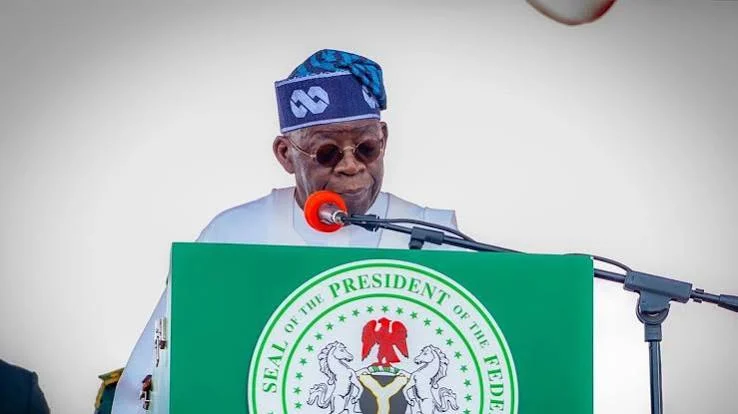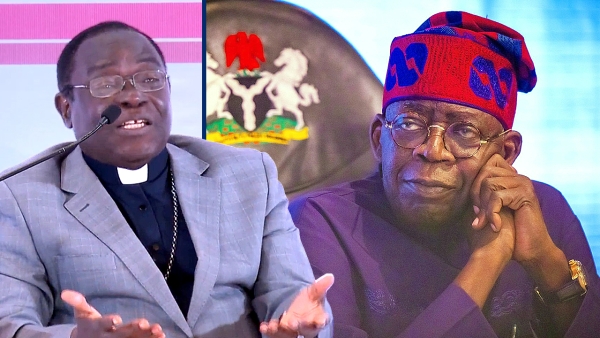
The Catholic Archbishop of Sokoto Diocese, Matthew Kukah, has voiced his concerns over the state of Nigerian leadership, asserting that successive presidents, including the current leader, Bola Ahmed Tinubu, and his predecessor, Muhammadu Buhari, ascended to power unprepared. Kukah characterized their rise to leadership as largely accidental, emphasizing the ongoing challenges in governance.
Delivering a keynote address at the commissioning of Start-Rite School’s new building and the 4th Amaka Ndoma-Egba Memorial Lecture in Abuja on Sunday, Kukah criticized what he described as a chronic lack of knowledge among Nigeria’s leaders. He lamented that the country’s democratic system continues to malfunction under successive administrations.
“If we are to start from the beginning, you will find that almost every leader who came to power in Nigeria did so as a result of one accident or another,” Kukah stated. He added that even President Tinubu, who claimed he was prepared for leadership, is visibly struggling. “We are still trying to get off the ground,” he said.
The clergyman traced the history of Nigerian leadership, highlighting a pattern of unanticipated successions. “President Buhari took over from Jonathan, who had initially planned to retire after being deputy governor but was thrust into power due to unforeseen circumstances,” he explained.
Kukah noted that Jonathan succeeded the late Umaru Musa Yar’Adua, who had intended to return to academia before his presidency. Yar’Adua had followed Olusegun Obasanjo, whose release from prison paved the way for his unexpected return to power. Obasanjo, in turn, succeeded General Sani Abacha, who had been grooming himself for indefinite rule until his death.
“Abacha was preceded by Ernest Shonekan, a business executive unexpectedly called to serve as interim Head of State,” Kukah said, further elaborating on the long-standing trend. “This recurring theme underscores the absence of deliberate and knowledgeable preparation for governance.”
Kukah emphasized that while global expectations for leadership have evolved significantly, Nigerian leaders have failed to adapt. “The fundamental issue in governance is knowledge. Leaders need a deep understanding of their environment to meet modern challenges,” he said.
His remarks come at a time when Nigeria is grappling with economic and social challenges, with critics questioning the effectiveness of current and past administrations. Kukah’s speech has reignited discussions about the necessity of intentional leadership training and preparation to steer Nigeria toward a more stable and prosperous future.