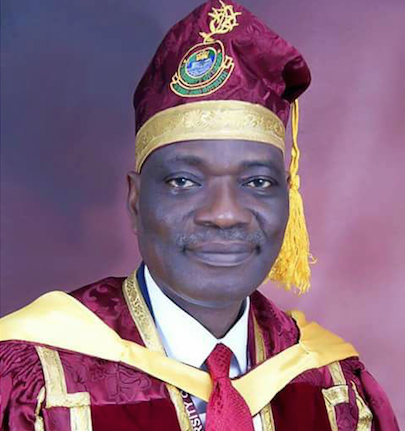
The University of Lagos (UNILAG) has lost no fewer than 239 first-class graduates employed as lecturers within just seven years, largely due to poor remuneration and an unconducive work environment.
This revelation was made by the institution’s immediate past Vice-Chancellor, Prof. Oluwatoyin Ogundipe, while delivering a lecture at The PUNCH Forum on Tuesday. The event, themed “Innovative Funding of Functional Education in the Digital Age”, was held at The PUNCH Place, Lagos-Ibadan Expressway.
According to Ogundipe, UNILAG recruited 256 first-class graduates as lecturers between 2015 and 2022, but as of October 2023, only 17 remained in the institution’s employ.
“At UNILAG, we decided that those with first-class honours should be employed. What is remaining is not up to 10 per cent. All of them have gone,” Ogundipe lamented. “In 2015, 86 were employed; in 2016, 82; during my time, 2017 to 2022, 88 were employed. As of October 2023, only 17 are still with us. They have all left because of poor pay and frustration.”
He warned that if nothing is done to address the crisis, Nigerian universities risk losing their best talents, predicting that in the next decade, women will dominate the academic workforce while underqualified candidates will flood postgraduate programmes.
“Many of our colleagues, especially the young ones, are tired. Soon, universities will look like secondary schools, where women dominate. Also, the calibre of students gaining admission into postgraduate studies will keep declining,” he said.
The former VC decried the chronic underfunding of education in Nigeria, stressing that government allocations to the sector had consistently remained below 10 per cent—far below UNESCO’s recommended 15–26 per cent.
He also called on lawmakers to enact legislation that would guarantee each first-generation university at least N1 billion annually to tackle dilapidated infrastructure.
Ogundipe, now Pro-Chancellor of Redeemer’s University, Ede, Osun State, further lamented overstretched infrastructure, poor research funding, lack of digital facilities, and devalued academic welfare.
“The consequences of chronic underfunding are immediate and profound: Nigeria now has the highest number of out-of-school children globally, estimated between 10 and 22 million. Over 60 per cent of primary education funding goes into teachers’ salaries, leaving little for infrastructure and innovation,” he stated.
To address the rot, Ogundipe advocated innovative funding strategies such as public-private partnerships, alumni endowments, philanthropy, education bonds, and leveraging the Nigerian diaspora for targeted investments.
He urged the private sector, alumni, faith-based groups, and donor agencies to see education funding not only as social responsibility but as a long-term investment in Nigeria’s workforce and national development.
“Above all,” Ogundipe concluded, “every Nigerian must see education as the most sacred trust we owe the next generation. Our names should be written in the libraries we build, the digital labs we equip, the scholarships we fund, and the lives we change.”