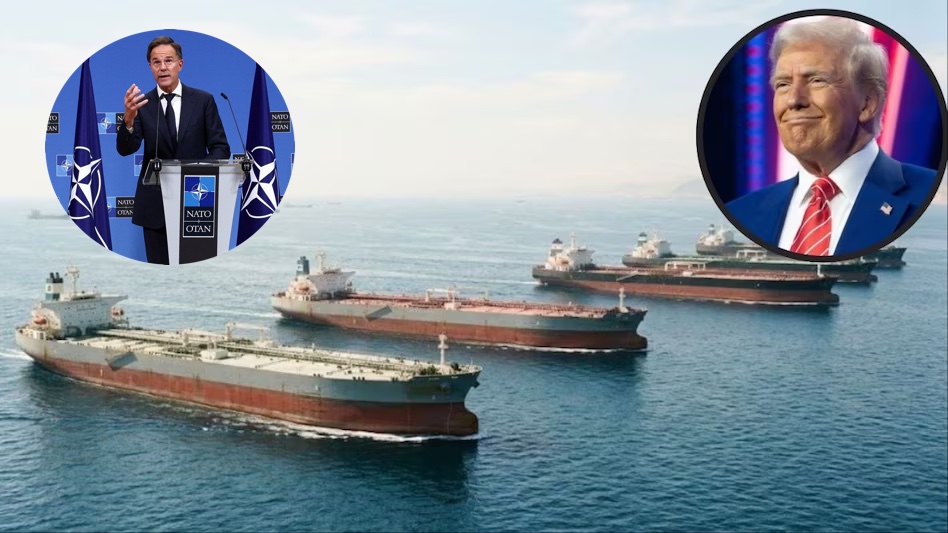
Key members of the NATO have rejected a proposed US-led blockade of Iranian ports, exposing divisions within the alliance as tensions continue to rise in the Gulf region.
The move follows an announcement by US President Donald Trump that American forces would enforce a naval blockade targeting vessels linked to Iran. He warned that any Iranian ships entering restricted zones could face destruction.
The blockade was introduced after negotiations with Tehran collapsed and is focused on vessels operating around the Strait of Hormuz, a critical maritime corridor through which roughly one-fifth of the world’s oil supply passes.
Despite initial expectations of allied support, major European powers, including the United Kingdom and France, have declined to participate, instead advocating diplomatic solutions and post-conflict strategies.
British Prime Minister Keir Starmer stated that the UK would not be drawn into the conflict despite what he described as “considerable pressure,” emphasising that avoiding direct military involvement remains a priority.
Similarly, French President Emmanuel Macron has distanced his country from the US approach, proposing a multinational initiative aimed at restoring safe navigation in the strait once hostilities ease. According to Macron, the mission would be defensive in nature, focusing on escorting commercial vessels and safeguarding freedom of navigation without engaging in combat.
NATO Secretary General Mark Rutte indicated that the alliance could still play a role in securing the waterway, but only if all member states agree on a unified strategy.
Diplomatic sources suggest that discussions are ongoing, with a potential planning meeting involving around 30 countries—including Gulf nations, India, and several European states—expected to take place in either Paris or London.
The proposed operation would function independently of both the US and Iran, deploying naval forces to reassure shipping lanes without appearing aligned with either side in the conflict.
However, the differing approaches have placed additional strain on transatlantic relations. Trump has previously criticised NATO allies over defence spending and burden-sharing, and has suggested scaling back US military presence in Europe.
Tensions have also reportedly intensified after some countries denied US military aircraft access to their airspace during operations linked to the Iran crisis.
Meanwhile, regional actors have urged restraint. Turkish Foreign Minister Hakan Fidan called for diplomatic efforts to take precedence, warning that establishing an international military force at this stage could prove complex.
Since the outbreak of hostilities on February 28, Iran has tightened control over access to the strait, raising concerns about potential restrictions on global shipping.
As divisions persist among Western allies, uncertainty continues to loom over global energy supplies and maritime security in one of the world’s most vital trade routes.