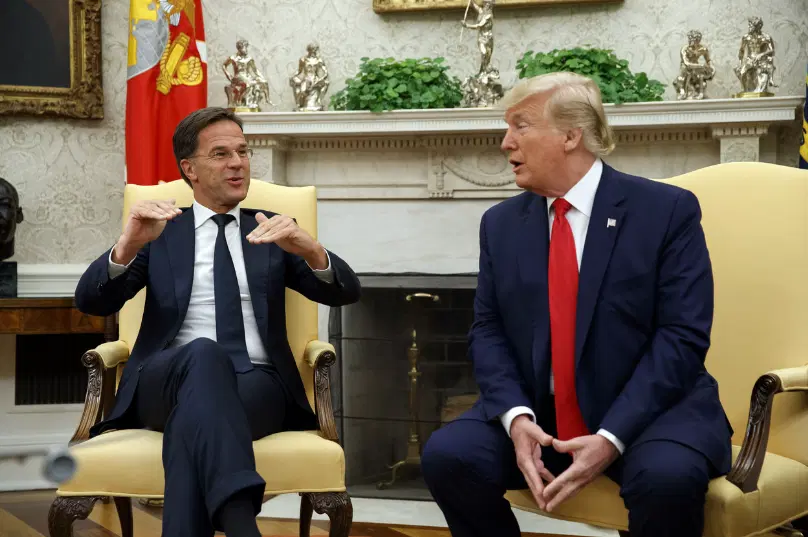
NATO Secretary General Mark Rutte met with U.S. President-elect Donald Trump in Palm Beach, Florida, on Friday to discuss critical global security challenges facing the alliance. The high-level meeting, confirmed by NATO spokeswoman Farah Dakhlallah on Saturday, underscored pressing issues, including threats from Russia, North Korea, and the broader implications for NATO’s future.
Strengthening Transatlantic Ties
The meeting marked one of Rutte’s first major diplomatic engagements since Trump’s election victory on November 5. Trump, who has previously criticized NATO and called for increased defense spending from European members, returned to the presidency amidst European concerns over his commitment to the alliance.
During his first term, Trump pressured NATO members to meet defense spending benchmarks and questioned the alliance’s structure. With his return, European leaders are anxious about the potential for reduced U.S. military support, particularly in Ukraine, where ongoing conflict with Russia continues to destabilize the region.
Emerging Threats: Russia-North Korea Ties
Rutte has been vocal about his concerns regarding closer ties between Russia and North Korea. Speaking at a European leaders’ meeting in Budapest recently, he warned of growing cooperation between Russia, North Korea, Iran, and China, describing it as a coordinated effort against Ukraine and broader Western interests.
“What we see more and more is that North Korea, Iran, China, and of course Russia are working together,” Rutte said. “Russia is delivering technology to North Korea, which poses a direct threat to both the U.S. mainland and continental Europe.”
Ukraine’s Strategic Importance
Both NATO and European leaders have emphasized the importance of maintaining support for Ukraine as it resists Russian aggression. Rutte reiterated that the fight in Ukraine is essential to the security of both Europe and the United States.
“At the same time, Russia has to pay for this,” Rutte noted, highlighting sanctions and collective measures designed to curb Moscow’s influence.
Trump’s Role in NATO’s Future
Rutte’s meeting with Trump signals an attempt to align NATO’s strategic goals with Trump’s vision for U.S. foreign policy. Trump’s approach to NATO during his previous presidency raised questions about the alliance’s unity, but the Friday talks are seen as a move to reinforce collaboration on shared security challenges.
“I look forward to sitting down with Donald Trump to discuss how we can face these threats collectively,” Rutte said before the meeting.
Looking Ahead
While the details of the discussions remain under wraps, the meeting underscores the importance of NATO’s transatlantic partnership in addressing global threats. Rutte’s efforts to engage Trump early in his presidency reflect NATO’s commitment to maintaining unity and adapting to evolving security challenges under renewed U.S. leadership.