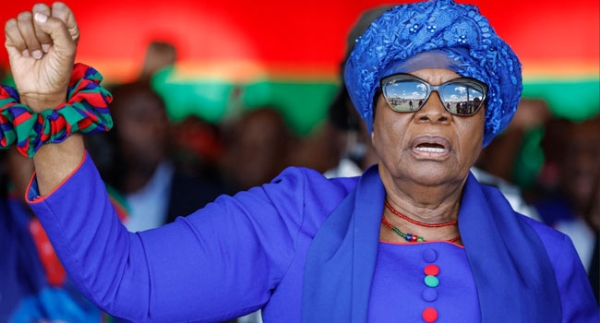
Namibia has made history by electing its first female president, Netumbo Nandi-Ndaitwah, following a contested election marred by logistical challenges and opposition rejection. The announcement came on Tuesday last week, with the ruling SWAPO party securing victory in the disputed polls.
The 72-year-old Nandi-Ndaitwah, who served as Vice President under SWAPO’s banner, garnered just over 57% of the vote, according to the Electoral Commission of Namibia (ECN). Her closest rival, Panduleni Itula of the Independent Patriots for Change (IPC), received 25.5%. Despite the milestone, the election outcome has been overshadowed by claims of irregularities and logistical issues that disrupted the voting process.
Historic Victory and Leadership Profile
Nandi-Ndaitwah’s election marks a significant milestone for Namibia, a country governed by SWAPO since gaining independence in 1990. Known affectionately as “NNN,” she is a seasoned politician and diplomat who previously held various ministerial roles. During her campaign, she promised to prioritize job creation by leveraging economic diplomacy to attract investments.
Recognizable by her gold-framed glasses and her frequent donning of blue, red, and green—the colors of SWAPO and the national flag—Nandi-Ndaitwah emphasized her decades of experience as an asset for leading the mineral-rich southern African nation.
Namibia is a major exporter of uranium and diamonds, yet unemployment remains alarmingly high, particularly among the youth, where rates soar to 46%. Many analysts believe her administration’s success will hinge on addressing these disparities.
Disputed Election Process
The presidential election, held on November 27, was extended twice due to technical issues, including shortages of ballot papers and overheating of electronic voter registration devices. These delays left many voters in queues for up to 12 hours, with some abandoning the process altogether.
The ECN acknowledged the logistical failures, describing them as unintentional. However, opposition parties and election observers have criticized the process as deeply flawed. The IPC, the main opposition party, rejected the results outright, with its candidate Panduleni Itula labeling the election “fraudulent” and pledging to seek its nullification through legal avenues.
Opposition Reaction and Allegations
Itula accused the ECN of deliberate attempts to disenfranchise voters, particularly those in opposition strongholds. “The IPC shall not recognize the outcome of this election,” he declared, citing a “multitude of irregularities.”
Southern African election monitors, including human rights lawyers, echoed these concerns, describing the delays as widespread and intentional.
Election Context and Regional Implications
The election was viewed as a litmus test for SWAPO’s enduring dominance in Namibia amid growing dissatisfaction with liberation-era political parties in southern Africa. In recent months, South Africa’s African National Congress lost its parliamentary majority, while Botswana’s Democratic Party was ousted after nearly six decades in power.
For Namibia, high youth unemployment, income inequality, and underdeveloped infrastructure remain key challenges despite the country’s natural resource wealth.
Looking Ahead
Nandi-Ndaitwah’s presidency is expected to focus on economic reform, youth empowerment, and rebuilding public trust in government institutions. Her historic election as one of the few female leaders in Africa has garnered international attention, with many seeing her tenure as a potential turning point for Namibia’s political and economic landscape.
However, the contested election results and ongoing opposition resistance may pose early challenges to her administration’s efforts to unite the nation and fulfill campaign promises.