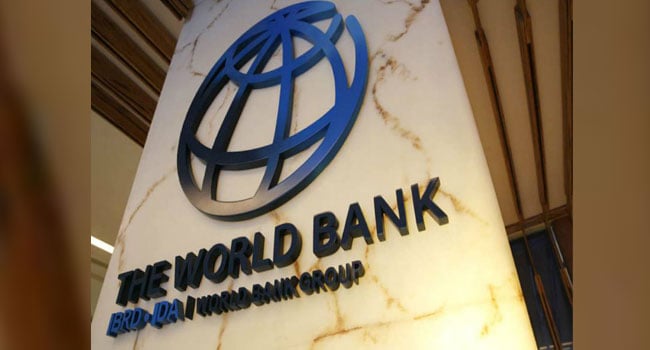
The World Bank is set to consider Nigeria’s request for a fresh $1 billion Development Policy Financing (DPF) loan on December 16, under a new framework titled “Nigeria Actions for Investment and Jobs Acceleration (P512892).”
According to official documents released by the Bank on October 27, the proposed facility comprises a $500 million International Development Association (IDA) credit and a $500 million International Bank for Reconstruction and Development (IBRD) loan. It is aimed at consolidating ongoing economic reforms, promoting private investment, and accelerating job creation across critical sectors.
The initiative is part of the Bank’s Macroeconomics, Trade, and Investment portfolio for Western and Central Africa and is designed to help Nigeria transition from economic stabilization to sustained, inclusive growth.
“The proposed Development Policy Financing supports Nigeria’s pivot from stabilization to inclusive growth and job creation,” the Bank’s project document stated. “It seeks to catalyze private-sector investment by expanding access to credit, deepening capital markets and digital services, easing inflationary pressures, and promoting export diversification.”
The Federal Ministry of Finance will oversee implementation, with the loan’s preparation process already cleared to proceed.
The fresh $1bn support comes as part of broader efforts by the World Bank to strengthen Nigeria’s post-reform recovery following key policy shifts implemented since 2023, including the removal of fuel subsidies, unification of exchange rates, and an end to central bank deficit financing.
According to the Bank, while these reforms have stabilized the macroeconomic environment and restored investor confidence, growth remains sluggish, with more than 130 million Nigerians still living in poverty.
The report noted that Nigeria’s economy “has yet to shift decisively into a higher and inclusive growth path,” stressing the need for deeper private-sector engagement to unlock productivity and employment.
The loan is structured around two strategic pillars: unlocking private sector growth by improving access to finance and digital inclusion, and reducing costs and improving competitiveness for businesses and households.
Under the first pillar, the loan will support the Investment and Securities Act 2025, establish new credit enhancement mechanisms, and strengthen microfinance regulations through the Central Bank’s forthcoming Rulebook for non-bank institutions.
It will also back the National Digital Economy and E-Governance Bill 2025, creating a legal framework for digital authentication, e-transactions, and record systems — key steps toward building a paperless, technology-driven government.
The second pillar aims to reduce inflationary pressures, streamline trade processes, and enhance export competitiveness. Planned measures include simplifying AfCFTA tariff concessions, easing import restrictions, and improving certified seed systems for major crops such as rice, maize, and soybeans.
The DPF loan aligns with complementary World Bank programmes, including FINCLUDE (to improve MSME financing access), BRIDGE (enhancing digital infrastructure), and AGROW (strengthening agricultural value chains). Together, these projects are expected to mobilize private capital, improve credit access for small businesses and farmers, and expand economic opportunities across Nigeria.
The initiative also aligns with the Paris Climate Agreement, incorporating components on climate-resilient agriculture, reduced deforestation, and low-emission digital governance systems.
According to the Bank, the reforms supported under this new loan are expected to reduce food inflation, expand digital exports, and create millions of jobs, both directly and indirectly.
Upon approval, disbursement will occur in two tranches tied to the completion of agreed policy milestones. Oversight will be handled by the Federal Ministry of Finance, working in partnership with the Central Bank of Nigeria and other line ministries.
As of June 30, 2025, Nigeria’s total external debt stood at $46.98 billion, with the World Bank remaining the country’s largest single creditor — holding $19.39 billion or 41.3 percent of total foreign debt.
The upcoming $1 billion loan could become one of the largest World Bank-backed policy support operations for Nigeria in recent years, reinforcing the administration’s commitment to sustained reform, inclusive growth, and job creation.