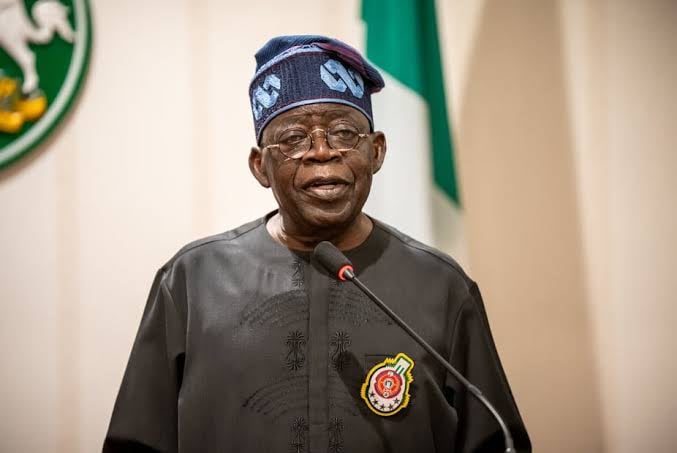
President Bola Tinubu has defended the economic reforms introduced by his administration over the past three years, insisting that the measures were necessary to prevent Nigeria from sliding into fiscal collapse and deeper economic instability.
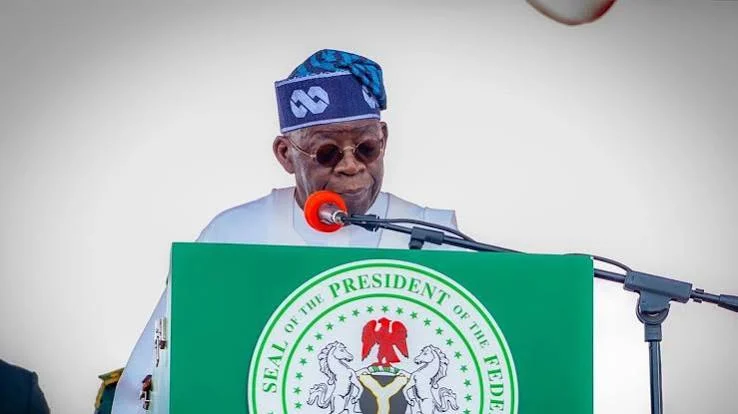
Speaking during a nationwide broadcast marking the third anniversary of his administration on Friday, Tinubu said his government inherited a country burdened by unsustainable fuel subsidies, exchange-rate distortions, mounting debt obligations, declining revenues, and widespread insecurity.
According to the president, decisive reforms implemented since May 29, 2023, helped stabilise the economy and restore investor confidence despite the hardship experienced by many Nigerians.
“Nigeria is going through a historic test that requires courage and sacrifice, but we will emerge stronger and more prosperous,” Tinubu stated.
The president acknowledged the rising cost of living caused by the reforms, particularly higher transportation and food prices, but maintained that avoiding difficult decisions would have resulted in a far worse economic crisis.
Tinubu disclosed that Nigeria was spending about N18.4 billion daily on petrol subsidies before his administration removed the policy, adding that subsidy payments exceeded N4 trillion in 2022 alone.
He also criticised the former multiple exchange-rate system, saying it encouraged speculation and reportedly cost the country over N8 trillion within three years.
According to Tinubu, the government deliberately chose “reform over ruin” to secure long-term economic recovery and fiscal stability.
The president said recent indicators suggest that the economy is beginning to recover, pointing to improvements in public finances, increased investor confidence, and major growth in the capital market.
He revealed that the Nigerian stock market’s All Share Index had risen from 53,000 points in 2023 to 250,000 points in 2026, while market capitalisation increased from N30 trillion to N160 trillion during the same period.
Tinubu also highlighted ongoing infrastructure projects across the country, revealing that more than 2,700 kilometres of highways and major roads are currently under construction, rehabilitation, or reconstruction nationwide.
In the oil and gas sector, the president said reforms had attracted fresh investments from international oil companies and improved local refining capacity through operational large-scale and modular refineries.
He added that the $5 billion NLNG Train 7 project was nearing completion and would significantly boost Nigeria’s liquefied natural gas export capacity.
On electricity, Tinubu said the government was addressing longstanding problems in the power sector by investing in transmission infrastructure, renewable energy, and grid expansion.
The president further highlighted interventions in agriculture, healthcare, housing, education, and telecommunications as part of the administration’s broader economic recovery agenda.
According to him, millions of farmers have benefited from government-supported agricultural programmes, while the Nigerian Education Loan Fund has disbursed over N282 billion to more than 1.5 million students.
Tinubu also said housing projects under the Renewed Hope Cities initiative were progressing in Abuja, Lagos, and Kano, while the administration’s consumer credit scheme was expanding access to financial support for workers and families.
Addressing security concerns, the president said military and security agencies had intensified operations against terrorists, kidnappers, bandits, and oil thieves, leading to improved safety in several parts of the country.
While admitting that many challenges remain unresolved, Tinubu insisted that the foundations for long-term recovery had been established.
He assured Nigerians that the next phase of governance would focus on ensuring that the benefits of the reforms translate into lower food prices, cheaper transportation, and increased employment opportunities.
The president also called for national unity and urged citizens not to lose faith in the country’s democratic and economic future.