Despite persistent power shortages and recent grid collapses within Nigeria, the country continues to provide uninterrupted 24-hour electricity to neighboring Togo and Benin. This was disclosed by Sule Abdulaziz, the Managing Director and CEO of the Transmission Company of Nigeria (TCN), during an interview on Channels TV’s Politics Tonight on Sunday.
Abdulaziz revealed, “We supply Togo, Benin, and Niger with power on a 24-hour basis, and they are paying for it,” affirming Nigeria’s role as a regional power supplier while grappling with its own electricity challenges.
The announcement comes as many Nigerians continue to experience inconsistent and unreliable electricity supply, leading to widespread frustration. Abdulaziz acknowledged the situation but clarified that not all Nigerians face the same power challenges. “Nigerians are getting 24-hour supply, but not everyone. Those in Band A receive 20 to 22 hours of power,” he explained.
Nigeria’s electricity distribution is divided into three tiers. Band A customers enjoy the most reliable electricity supply, receiving between 20 and 24 hours of power daily. Band B customers receive 16 to 20 hours, while Band C customers are left with 12 to 16 hours of electricity per day. This tiered system has sparked criticism, with many citizens outside Band A experiencing frequent power cuts.
When questioned about the possibility of improving the nation’s power supply, Abdulaziz expressed optimism, stating that nationwide improvements could be achieved within the next few years. “I am confident that we can attain consistent power supply in less than five years. The new minister is focused on addressing the root issues rather than implementing superficial solutions,” he stated.
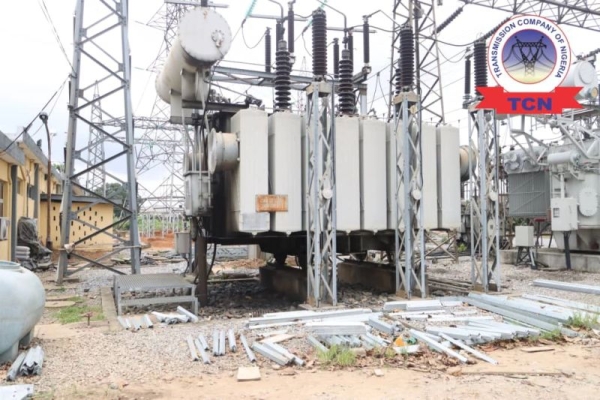
Abdulaziz also addressed the country’s recurring power grid collapses, which have been a significant source of concern for Nigerians. He emphasized that the collapses were not solely the responsibility of TCN, as the failures could originate from any point in the power system, including generation, transmission, or distribution. “A system collapse doesn’t mean it’s entirely TCN’s fault. It could result from problems in any sector of the power chain, including unforeseen disasters,” he explained.
Furthermore, the TCN boss sought to dispel confusion between the current operations of TCN and the defunct National Electric Power Authority (NEPA). “People still confuse TCN with NEPA. Back when we were NEPA, we handled generation, transmission, distribution, and marketing. Now, TCN is only responsible for transmission, but people often blame us for failures in other sectors,” he clarified.
One of the major hurdles to improving Nigeria’s power supply, according to Abdulaziz, is the country’s aging infrastructure. “Many of the equipment we’re using are over 50 years old,” he admitted, underscoring the need for significant upgrades and investment in the sector.
Despite rising complaints about electricity costs, Abdulaziz defended Nigeria’s rates, arguing that electricity prices in the country remain lower than in many other African nations. “People feel electricity is expensive here because they’re used to paying less. In reality, if you compare prices with other African countries like Burkina Faso, Senegal, and Niger, Nigeria’s rates are cheaper,” he concluded.
As Nigeria continues to face power shortages at home, the revelation that it supplies uninterrupted electricity to its neighbors has added to the frustration felt by many Nigerians, raising further questions about the nation’s energy priorities and management.