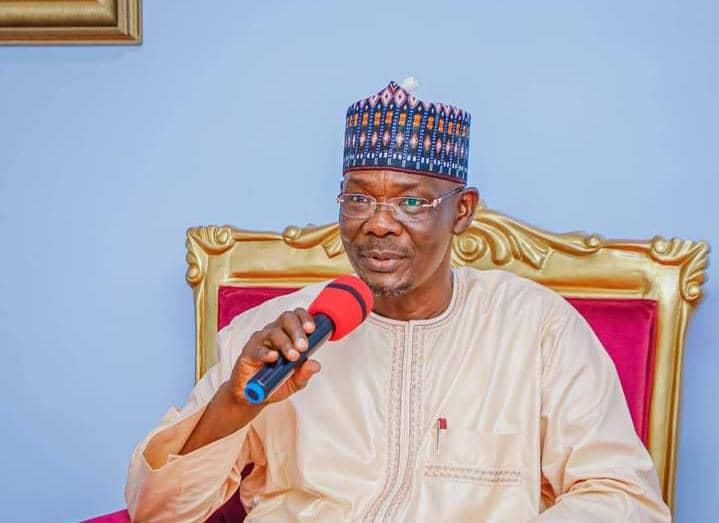
Nasarawa State Governor Abdullahi Sule has clarified why the Northern Governors Forum (NGF) opposes the proposed Value Added Tax (VAT) derivation-based distribution model in Nigeria’s new tax bill, currently before the National Assembly. Speaking on Channels TV’s Politics Today, Governor Sule emphasized that the governors believe the model would disadvantage northern states by limiting revenue in a way that could lead to financial inequity across the region.
In a recent NGF meeting chaired by Governor Inuwa Yahaya of Gombe State, the 19 northern governors unanimously rejected the derivation-based VAT sharing model, raising concerns that it would shift revenue allocation towards states with higher VAT generation at the expense of northern states, which currently contribute a smaller share of VAT.
Sule, stressing that the NGF’s opposition is not directed at President Bola Ahmed Tinubu, stated, “We can’t bring in President Tinubu and then oppose him. This decision was made collectively across party lines, with participation from APC, PDP, and independent stakeholders.” He further explained that the meeting included traditional rulers and representatives beyond political affiliations, reflecting broad consensus within the North.
Governor Sule elaborated on the specific aspects of the bill that raised concerns among northern governors. “If VAT is distributed based on derivation, northern states, which generate far less VAT, would effectively lose out on a significant portion of federal revenue,” Sule explained, comparing the proposed system to the current 13% derivation model used for oil-producing states.
Sule drew from his own professional experience in the corporate sector, recalling his time at Dangote Group. “For instance, when importing raw materials at Apapa Port, VAT was paid upfront, and then VAT was added to the finished products. Such systems inherently favor states with more commercial activity,” he noted, underscoring how this distribution model would further intensify regional economic disparities.
This stance reflects growing unease among northern leaders over how changes to VAT distribution could impact socio-economic stability. NGF officials fear that a shift in revenue allocation might diminish the ability of northern states to fund essential services and development projects.
As discussions over the tax bill continue in the National Assembly, the NGF has reiterated its commitment to ensuring fiscal policies that promote equitable development across Nigeria. “Our objective is not opposition for opposition’s sake,” Sule said, “but to ensure that all states, regardless of their economic base, receive fair and just treatment in national revenue sharing.”
Governor Sule’s remarks underscore the NGF’s focus on advocating for a tax framework that aligns with the unique needs and economic capabilities of each region. The governors have urged lawmakers to consider the potential impacts on regional development as they deliberate on the VAT bill, hoping for a resolution that balances revenue generation with equitable distribution for all states.