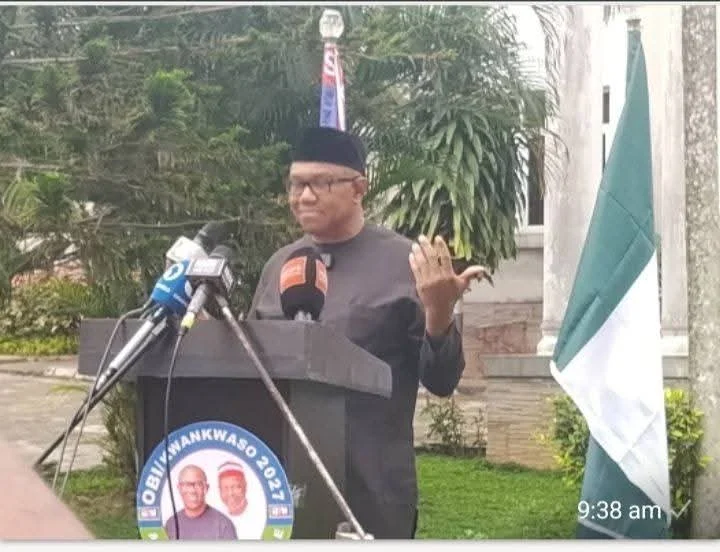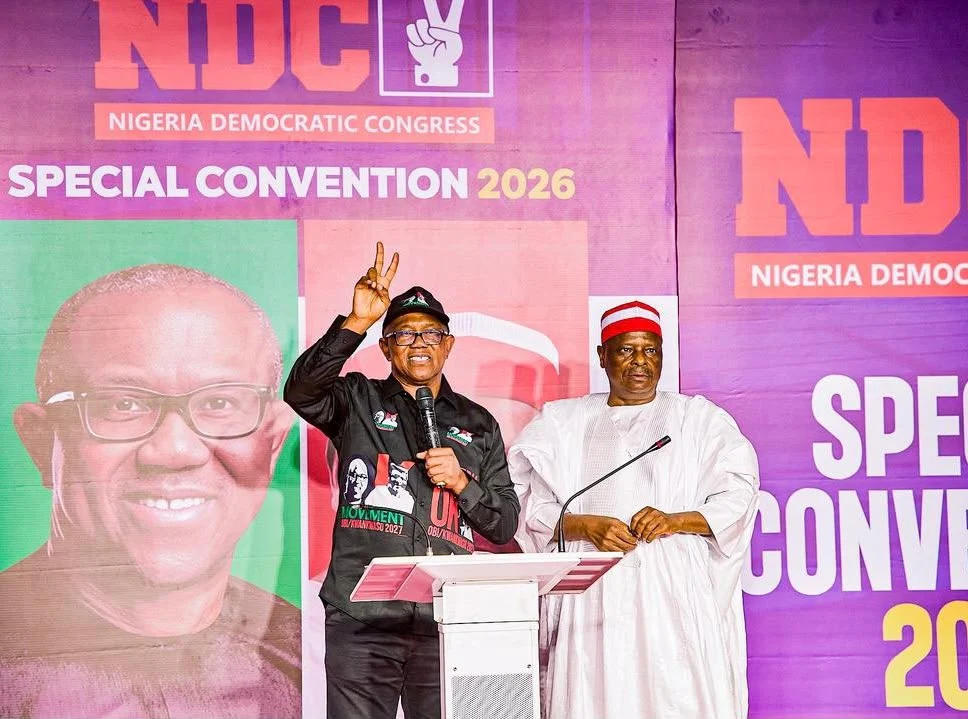
Peter Obi, the presidential candidate of the Nigerian Democratic Congress (NDC), has formally announced former Kano State Governor, Senator Rabiu Kwankwaso, as his running mate for the 2027 presidential election, pledging that the former NNPP presidential candidate would serve as a full partner in government rather than a ceremonial deputy.
Obi made the declaration during his acceptance speech after emerging as the NDC’s presidential candidate, according to a statement shared on his official X account on Sunday.
The former Anambra State governor described his nomination as a call to national service and outlined an ambitious agenda focused on national unity, security, economic transformation, healthcare, education, agriculture, energy, and governance reforms.
“I will make democracy work and the Vice President will be a partner, not a spare tyre,” Obi said while officially naming Kwankwaso as his vice-presidential candidate.
The announcement comes after both politicians contested the previous presidential election separately. Obi finished third, while Kwankwaso, who ran on the platform of the New Nigeria Peoples Party (NNPP), placed fourth and secured victory only in Kano State, where he maintains significant political influence.
Obi expressed gratitude to party leaders, including National Chairman Seriake Dickson, the National Working Committee, and supporters nationwide for entrusting him with the party’s presidential ticket.
Addressing the state of the nation, Obi said Nigeria was facing a period of uncertainty marked by insecurity, economic hardship, and declining public confidence in government institutions. He urged Nigerians to embrace unity and reject divisions based on ethnicity, religion, or region.
On security, Obi said the country’s challenges had intensified in recent years and stressed the need for urgent action to protect lives and property. He highlighted Nigeria’s longstanding reputation as a contributor to international peacekeeping missions and called for renewed efforts to restore safety across the country.
The NDC candidate also unveiled plans to strengthen Nigeria’s healthcare sector, noting that only a fraction of the country’s primary healthcare centres are fully operational. He pledged to expand health insurance coverage, increase healthcare funding, rehabilitate healthcare facilities across the country, and improve staffing and training for medical workers.
In the education sector, Obi promised significant investment in schools, teachers, and vocational training programmes, arguing that human capital development would be critical to boosting innovation and economic productivity.
On agriculture, he raised concerns about food insecurity and pledged to unlock Nigeria’s agricultural potential through increased investment and expanded cultivation of arable land.
Obi also outlined plans to improve electricity generation, saying Nigeria’s current power output remains inadequate for its population and economic needs. He promised to increase electricity generation by at least 10,000 megawatts within four years if elected.
Addressing unemployment, Obi argued that joblessness and underemployment remain major challenges, particularly among young people. He pledged support for small and medium-sized enterprises through improved access to funding, tax incentives, and targeted interventions designed to stimulate economic growth.
He further promised to tackle corruption, reduce the cost of governance, strengthen the rule of law, and deepen democratic institutions as part of his vision for what he described as a “New Nigeria.”
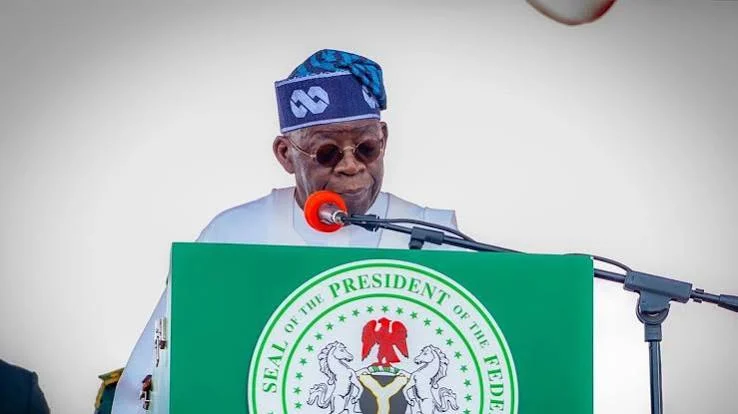
The Obi-Kwankwaso ticket is expected to reshape the political landscape ahead of the 2027 general election as opposition parties intensify preparations for the contest against incumbent President Bola Tinubu and other potential challengers.