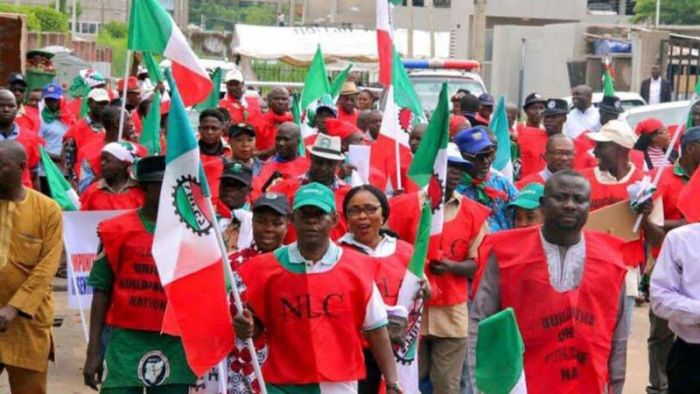
The Nigeria Labour Congress (NLC) and the Trade Union Congress of Nigeria (TUC) have affirmed their determination to launch a nationwide strike on October 3, 2023. In a message commemorating the country’s 63rd Independence anniversary, the unions called upon all Nigerians, irrespective of their ethnic, religious, or political affiliations, to participate in the forthcoming nationwide strike.
The labor unions appealed to traditional leaders and other well-meaning individuals within the country to use their influence to urge the government to pay heed to labor’s concerns and alleviate the widespread suffering afflicting the nation.
In their statement, the unions emphasized that Nigeria has the potential to be a prosperous nation that benefits all its citizens, but achieving this requires concerted effort and cooperation. They encouraged Nigerians to unite as the owners of the country, working together with determination and unity to realize a brighter future.
NLC President, Comrade Joe Ajaero, conveyed a message titled “Nigeria: The Travails of a Mismanaged Giant,” in which he stressed that the struggle set to commence on October 3 aims to revitalize Nigeria as a symbol of hope and prosperity. Despite its imperfections at its inception, Nigeria possesses the inherent potential to rank among the world’s leading economies.
Ajaero asserted, “As we mark this Independence Day, let us do so with a renewed sense of purpose. Let us acknowledge our past, confront our present challenges, and collectively work towards a brighter future for Nigeria.”
He further called for unity among Nigerians and emphasized the need to build a coalition across all regions of the country. He lamented that Nigeria had once been a nation filled with promise, led by visionary leaders, but had since been marred by ineptitude and corruption at the highest levels of government.
The labor leader criticized the mismanagement of national resources, citing the decline of national assets like Nigeria Airways and the national shipping line. He pointed out that Nigeria now lacks a national airline or shipping line, and even attempts to establish one have been fraught with controversy and embarrassment.
Ajaero urged Nigerians to question why the nation continues to import products like refined petroleum when it has the capability to refine such products locally. He also raised concerns about the depreciation of the Naira and the dominance of foreign currencies in the country’s economy.
The unions expressed a desire to investigate the privatization of state-owned entities, highlighting that many of them were sold at bargain prices to so-called investors who subsequently failed to operate or maintain them.
Additionally, they called for scrutiny of the healthcare system, which has deteriorated to the point where citizens, including the wealthy, seek medical treatment abroad. The unions also questioned the state of education in Nigeria, with the rising cost of tertiary education making it inaccessible to many.
Finally, the labor unions called for an inquiry into the country’s security challenges, particularly the inability to decisively address the Boko Haram insurgency.
In conclusion, the NLC and TUC’s message underscored the need for Nigerians to reflect on the nation’s past and present challenges while advocating for a united front to address these issues and propel the country toward a more promising and equitable future.