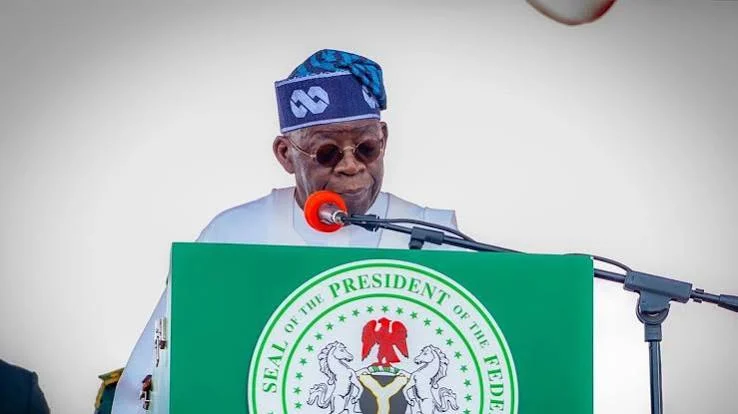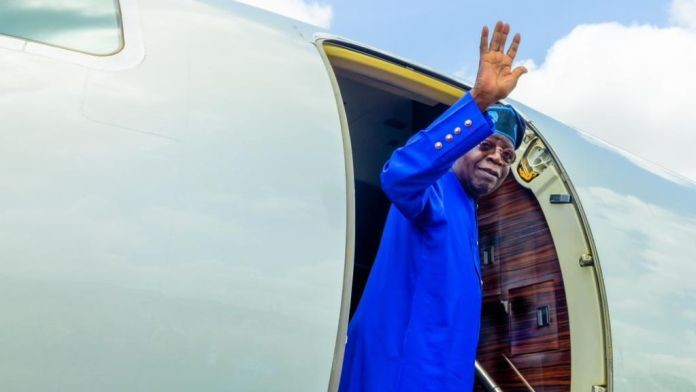
President Bola Tinubu, Vice President Kashim Shettima, and First Lady Remi Tinubu incurred travel expenses amounting to N8.64 billion between January and March 2024. This includes N5.24 billion spent on local and foreign travel and an additional N3.4 billion on other related costs within six months of Tinubu assuming office.
According to GovSpend, a civic tech platform that tracks federal spending, N1.35 billion was allocated for presidential trips and related expenses over the three-month period. The platform also revealed that N3.53 billion was spent on foreign exchange purchases for ten international trips, while N637.85 million was paid to two travel agencies for air tickets for both local and foreign travels. Notably, these figures do not include the estacodes for the President’s entourage.
Furthermore, the government spent N12.59 billion on maintaining the presidential air fleet during the same period. This spending significantly exceeds the N2.49 billion earmarked for the President’s travel expenses in the 2023 budget by 36 percent.
In their first seven months in office, President Tinubu and Vice President Shettima traveled extensively, visiting 16 countries and spending a collective 91 days abroad. President Tinubu’s destinations included Paris, London, Bissau, Nairobi, Porto Norvo, New Delhi, Abu Dhabi, Dubai, New York, Riyadh, and Berlin, totaling 55 days. Vice President Shettima represented Nigeria in Italy, Russia, South Africa, Cuba, China, and the US, logging 36 days abroad in 2023.
The frequent travels of the President and his Vice have sparked concerns among Nigerians, who have called for more tangible outcomes from these trips. Financial expert Olorunfemi Idris highlighted the potential benefits of presidential trips, such as strengthening diplomatic ties, promoting national interests, and attracting foreign investment. He cited agreements on security, economic development, climate change, and infrastructure investments as positive outcomes of Tinubu’s recent travels.
“Presidential trips can foster relationships with other countries, leading to increased cooperation and trade. The president can advocate for Nigeria’s interests on the international stage, securing agreements and partnerships,” Idris said. However, he also pointed out the significant costs associated with these trips, which could otherwise be allocated to essential sectors like healthcare, education, and infrastructure development.
Professor of Economics Cletus Agu echoed this sentiment, emphasizing the importance of the purpose behind the expenditures. “What you should ask is why is he spending such an amount? Of what use and purpose? He might be spending N10 million but the impact on the economy may be N100 million. If he is spending the money with the view to making Nigeria better, there is nothing wrong with it,” Agu stated.
Economist Dr. Akin Akinleye called on the government to cut irrelevant expenses given the country’s current economic situation. “They have the right to travel, but they have to prioritize the economy because it is not in a good state. Any traveling that will not have any economic benefit to the nation should be dropped,” he urged.
The debate over the travel expenses of Nigeria’s top officials continues, with calls for greater transparency and accountability in how public funds are used, especially during times of economic hardship.