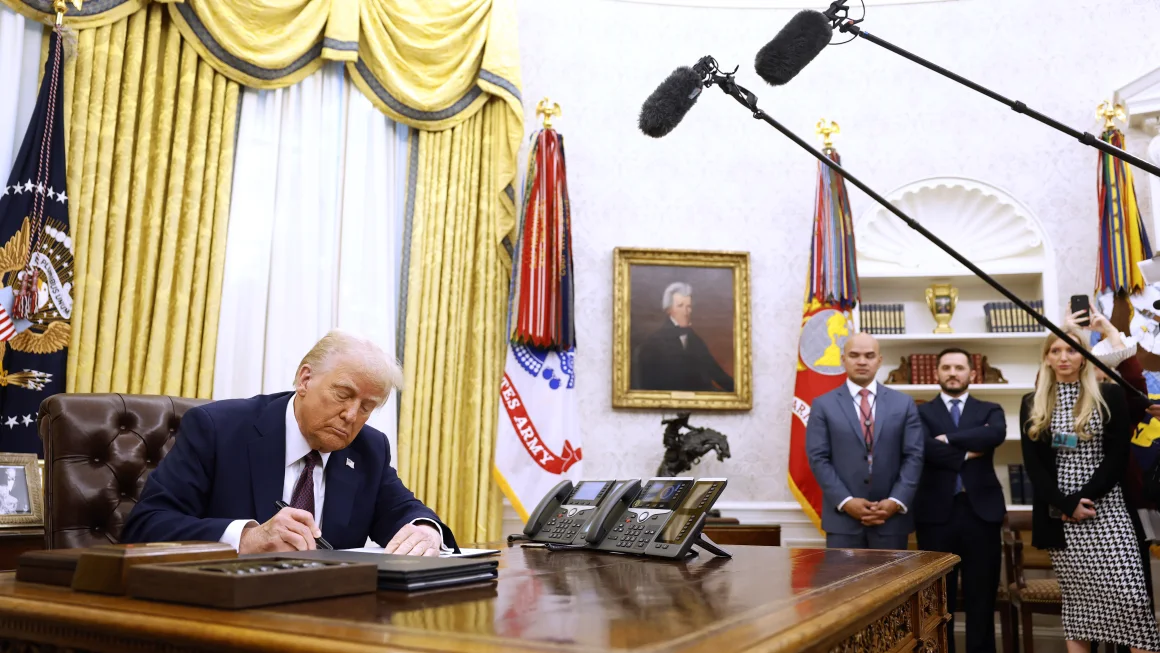
In a polarizing move that has reignited debates on equality and inclusion, former U.S. President Donald Trump signed an executive order banning transgender individuals from serving in the military. This executive action reverses a 2021 order by President Joe Biden that had allowed transgender Americans to serve openly in the armed forces.
The new directive, which was announced alongside a broader restructuring of military policies, cites concerns over military readiness and “unit cohesion” as the primary reasons for the ban. The executive order also places restrictions on transgender women, barring them from using or sharing sleeping, changing, or bathing facilities designated for females.
Rationale and Backlash
According to an official fact sheet accompanying the executive order, the administration argued that open service by transgender individuals had negatively impacted military performance and operational unity. However, critics have labeled these claims as baseless and discriminatory, drawing parallels to historical exclusions of marginalized groups such as women, Black Americans, and gay service members from the military.
LGBTQ+ advocacy organizations, civil rights groups, and Democratic lawmakers swiftly condemned the move. Advocacy groups like the Human Rights Campaign have pledged to challenge the decision in court, stating that it violates constitutional protections and undermines the rights of transgender individuals who are willing to serve their country.
Sarah Ellis, a spokesperson for the National LGBTQ Task Force, said in a statement, “This decision is not about military readiness—it is about discrimination, plain and simple. Transgender service members have proven their valor and commitment time and again. To exclude them is to weaken, not strengthen, our military.”
Broader Implications for Military Policy
The executive order is part of a larger agenda under the Trump administration to reshape military policies. New Defense Secretary Pete Hegseth has confirmed additional measures, including the removal of Diversity, Equity, and Inclusion (DEI) programs from the Pentagon. In a controversial decision, the administration also plans to reinstate back pay for service members who were discharged for refusing Covid-19 vaccinations and offer them an opportunity to rejoin the military.
Hegseth emphasized the administration’s vision of “restoring traditional military values” and focusing on readiness over what he described as “social experiments.” This has included significant cuts to DEI initiatives, a decision that has drawn sharp criticism from those who view these programs as essential to fostering a modern, inclusive military.
Transgender Advocacy and Legal Challenges
Transgender advocacy groups have vowed to mount a legal challenge to the executive order. Many argue that excluding transgender individuals from military service ignores their significant contributions and sacrifices. According to studies conducted by organizations like RAND Corporation, allowing transgender service members has had no adverse impact on military effectiveness.
Retired military officer Lieutenant Colonel Andrea Johnson, a transgender veteran, expressed dismay at the order: “This decision dishonors the sacrifices made by countless transgender individuals who have served with distinction. It is a step backward for our military and our nation.”
Historical Context
This is not the first time the Trump administration has sought to restrict transgender military service. In 2017, Trump announced a similar ban via Twitter, though legal battles and public outcry led to a partial implementation of that policy. President Biden later rescinded the ban upon taking office in 2021, reaffirming the rights of transgender Americans to serve openly.
The latest executive order marks another chapter in the ongoing debate over inclusivity within the military. Legal experts predict a lengthy court battle, with advocacy groups aiming to halt its implementation and reinstate protections for transgender service members.
As the controversy unfolds, the decision highlights the broader tension between traditionalist and progressive approaches to governance and the role of diversity within institutions like the U.S. military.