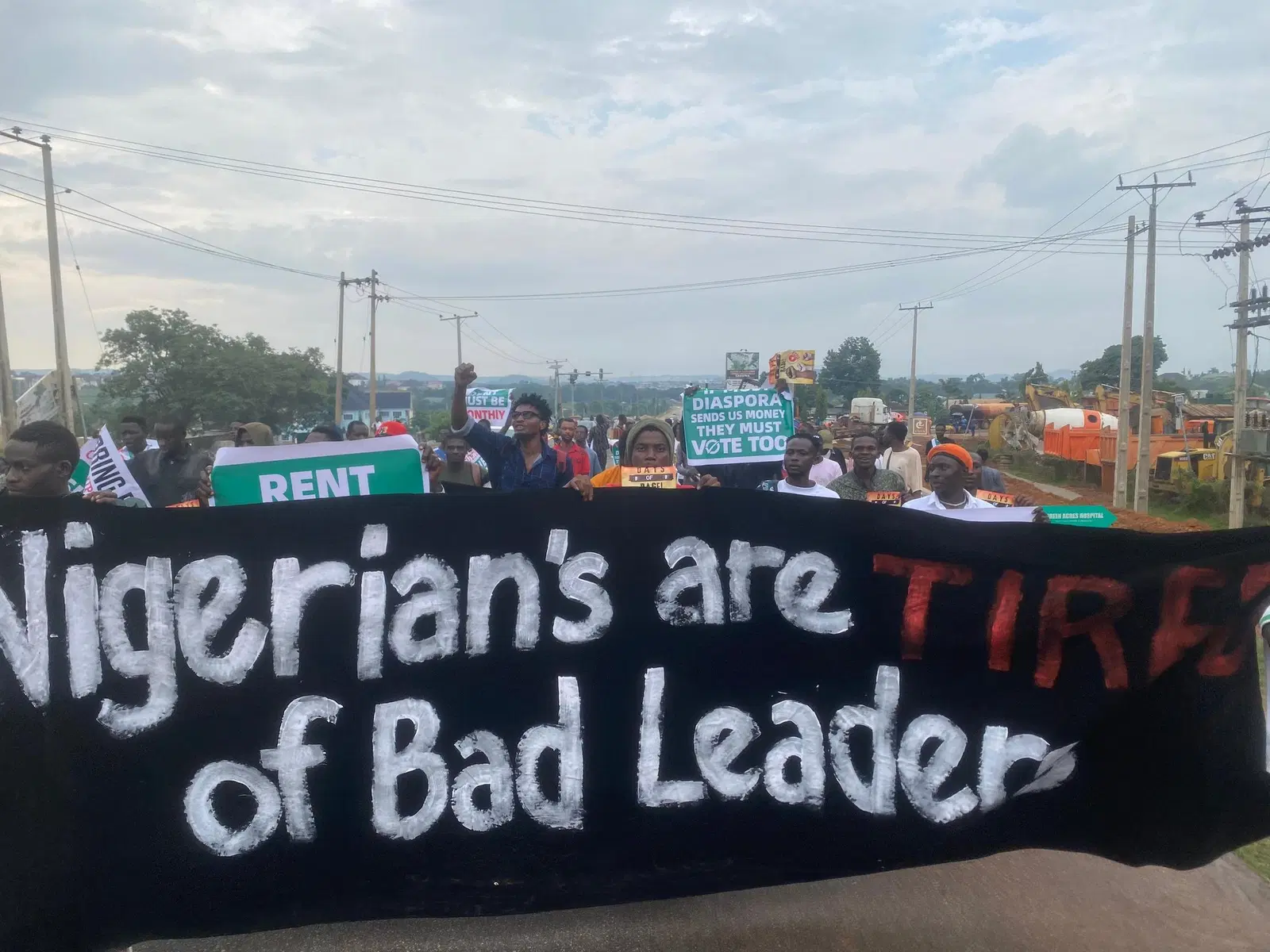
On Saturday, August 10, 2024, protesters in Abuja persisted in their demonstrations against bad governance, converging at two strategic locations, Apo and Lokogoma districts. This marked the tenth consecutive day of protests since the movement began on August 1. The protesters, who had vowed to carry out a “one million man march,” strategically avoided the MKO Abiola National Stadium and Eagle Square, where heavy police and military presence was reported.
Gathering as early as 7 a.m., the demonstrators brandished placards with messages like “End Hunger” and “Reverse Fuel Subsidy Removal,” calling for immediate action from the government. The protest was a continuation of widespread discontent over the economic hardships brought on by the removal of the fuel subsidy, which has exacerbated the cost of living and triggered significant public outcry.
Despite heavy security in the city center, the protesters managed to peacefully assemble at their chosen locations, demonstrating their resolve to continue their agitation. The previous days of protest had seen violent escalations in several northern states, including Kano, Zamfara, and Kaduna, where demonstrations were hijacked by hoodlums leading to looting, infrastructure damage, and attacks on motorists.
The wave of unrest has also seen some protesters in northern regions displaying foreign flags and calling for regime change, a move that has been widely condemned by Nigerians, including the armed forces and other security agencies. The organizers of the protest have also distanced themselves from these calls, reaffirming their focus on demanding policy reversals and economic relief for the populace.
The ongoing protests highlight the growing frustration among Nigerians over economic difficulties and the perceived failure of the government to address the nation’s challenges effectively. The demonstrations have drawn significant attention, both locally and internationally, as citizens continue to push for change.