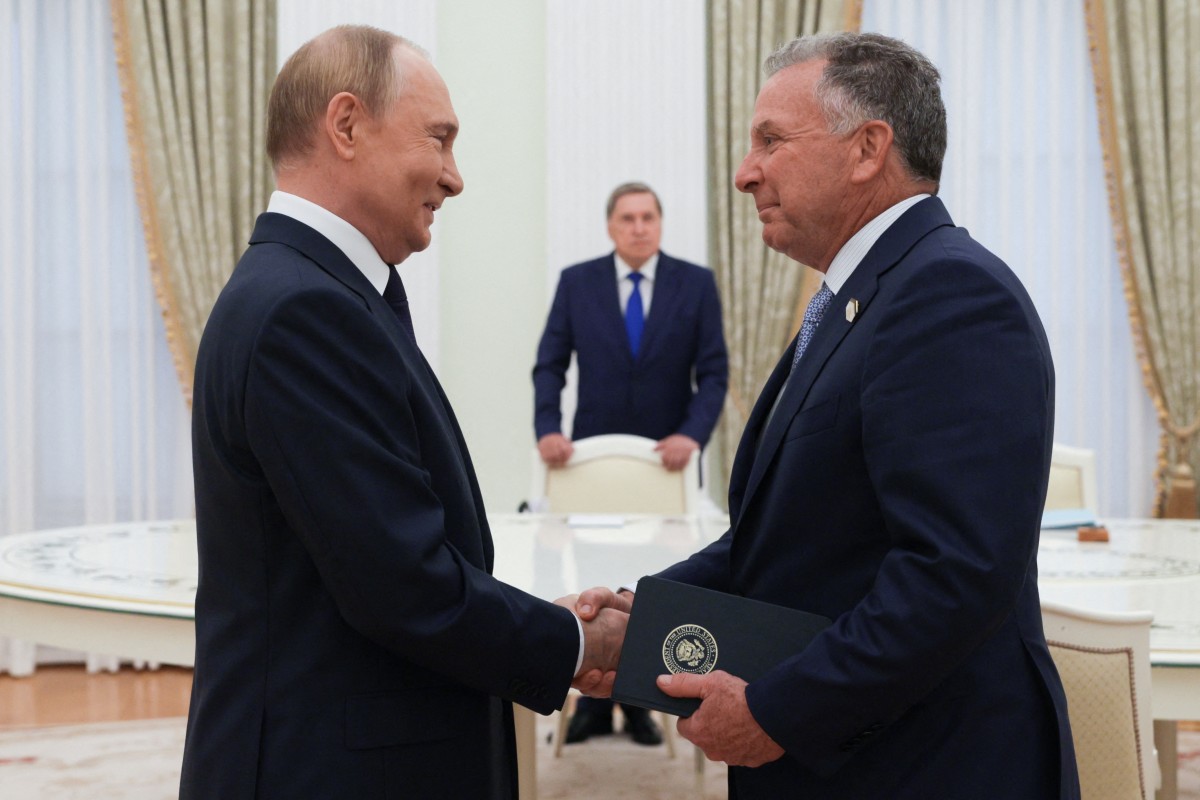
MOSCOW — Russian President Vladimir Putin met with US envoy Steve Witkoff at the Kremlin on Wednesday, just two days before a deadline set by US President Donald Trump for Moscow to make progress toward halting its Ukraine offensive or face sweeping new sanctions.
The high-level meeting comes amid mounting pressure from Washington, which has warned of potential “secondary tariffs” targeting Russia’s key trading partners, including China and India, if the Kremlin fails to take steps toward peace by Friday.
Trump, who has long claimed he could resolve the Ukraine conflict within 24 hours of taking office, has tied the sanctions threat to tangible progress in ceasefire negotiations. But three rounds of peace talks in Istanbul have so far yielded no breakthrough, with both Moscow and Kyiv entrenched in their demands.
Escalation on the Ground
Despite the stalled negotiations, Russia has intensified its military campaign. July saw record-high drone and missile strikes against Ukraine, according to Kyiv’s air force, alongside ground advances into regions beyond those Moscow has formally claimed to annex.
Ukrainian officials on Wednesday reported at least two deaths and 10 injuries after Russian shelling hit a holiday camp in the southern Zaporizhzhia region overnight.
Ukrainian President Volodymyr Zelensky has urged Washington and its allies to step up pressure on Moscow. In a statement posted shortly after Witkoff’s arrival in Moscow, Zelensky emphasized the urgency of “strengthening all levers” to enforce an immediate ceasefire, adding, “Ukraine appreciates the efforts of our partners, of America, and of everyone who is helping.”
Sanctions Pressure
The White House has not detailed the specific measures it will implement should Moscow fail to comply, but Trump told reporters on Tuesday he would “see what happens” following the Moscow talks before finalizing any economic retaliation.
The Kremlin has condemned Washington’s sanctions threats as “illegitimate,” particularly the idea of penalizing Russia’s trade partners. Kremlin spokesperson Dmitry Peskov said on Monday that Moscow considered the Witkoff talks “important, substantial, and helpful” in exploring possible avenues toward de-escalation.
Heightened Nuclear Rhetoric
The diplomatic engagement comes against a backdrop of escalating nuclear posturing. Trump confirmed earlier this week that he had ordered two US nuclear submarines to be deployed “in the region” following a heated exchange with former Russian president Dmitry Medvedev. While Trump did not specify whether the submarines were nuclear-armed or nuclear-powered, their exact locations remain classified.
In a sharp response, Moscow announced it would end its self-imposed moratorium on nuclear-capable intermediate-range missiles, signaling it could deploy such weapons in response to perceived US moves.
Core Disputes Remain
At the heart of the deadlock are Moscow’s demands that Ukraine cede additional territory and formally renounce its ambitions to join NATO—conditions Kyiv has rejected outright. Ukraine continues to call for an immediate ceasefire without concessions, while Zelensky has gone as far as urging allies to support “regime change” in Moscow.
The Witkoff-Putin meeting is the latest in a series of high-stakes diplomatic exchanges aimed at defusing one of the world’s most dangerous conflicts. Whether it will succeed in averting the looming US sanctions remains uncertain, with both capitals signaling tough positions as Friday’s deadline approaches.