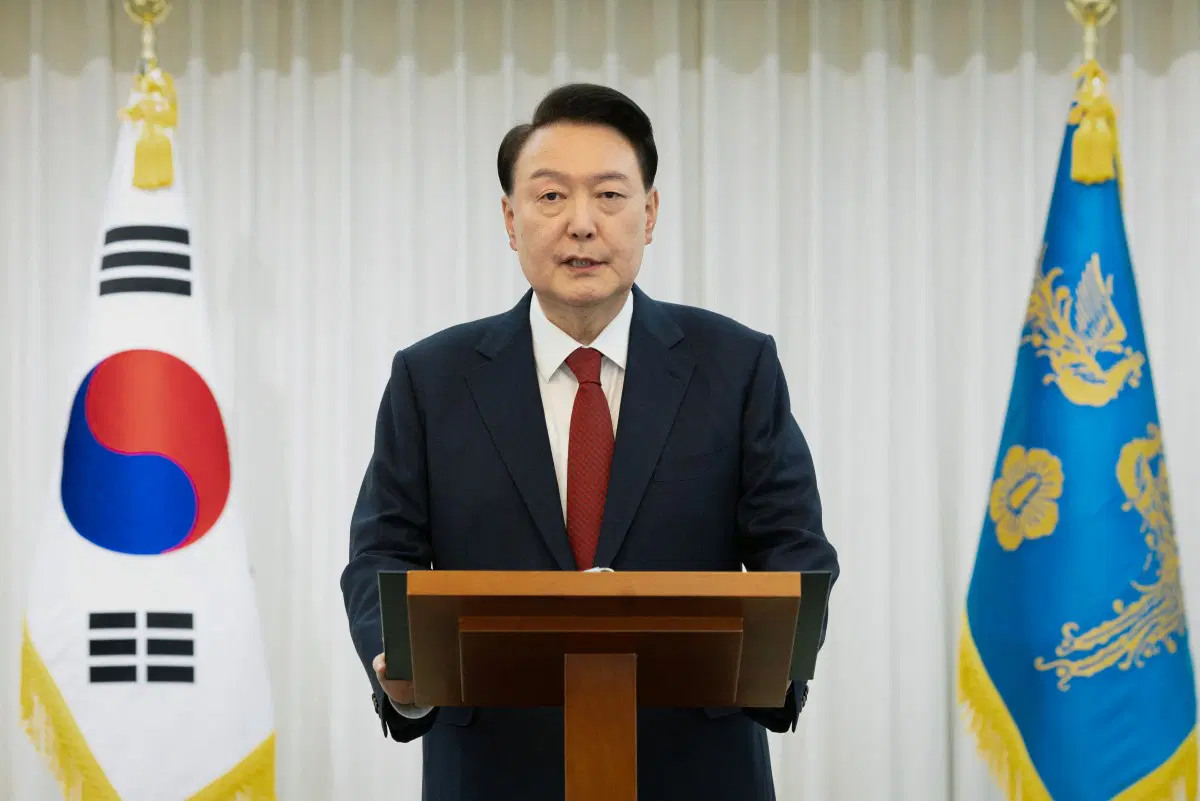
South Korea’s political landscape remains in turmoil as opposition leader Lee Jae-myung on Sunday called for the Constitutional Court to expedite its ruling on the impeachment of President Yoon Suk Yeol. Lee argued that a swift decision would alleviate the “suffering of the people” following Yoon’s controversial and short-lived declaration of martial law.
The impeachment vote, held on Saturday, came after Yoon’s suspension of civilian rule plunged the nation into one of its most severe political crises in years. With Yoon suspended from office, Prime Minister Han Duck-soo has assumed the role of interim leader.
The Constitutional Court has up to 180 days to decide Yoon’s fate.
Opposition Pushes for Urgency
Opposition leader Lee urged the court to act decisively. “To hold those responsible for this absurd situation accountable and to prevent its recurrence, it is essential to uncover the truth and demand accountability,” Lee said in a statement on Sunday.
His remarks follow days of mounting unrest, with protests both supporting and opposing the impeachment erupting across Seoul. Police estimate that over 200,000 demonstrators gathered outside parliament to demand Yoon’s removal during Saturday’s impeachment proceedings.
Martial Law Fallout and Arrests
Investigations into the events surrounding Yoon’s martial law declaration have led to a series of arrests within the military’s top brass. On Sunday, police detained the current and former heads of the Defense Intelligence Command for their alleged roles in the insurrection.
Prosecutors are also pursuing an arrest warrant for Kwak Jong-keun, head of the Army Special Warfare Command, accusing him of deploying special forces to parliament during the martial law decree. This move led to a dramatic standoff between soldiers and parliamentary staff.
Yeo In-hyung, head of the Defense Counterintelligence Command, was also arrested on Saturday for insurrection-related charges.
Meanwhile, Yoon has been summoned for questioning over his alleged role in the insurrection. Prosecutors disclosed that Yoon had refused their initial summons, prompting plans for a second.
Government’s Efforts to Project Stability
Despite the political chaos, acting President Han Duck-soo has sought to maintain an image of stability. Han spoke with U.S. President Joe Biden on Sunday, reaffirming the strength of the U.S.-South Korea alliance.
A White House statement praised South Korea’s “resiliency of democracy and rule of law” and expressed confidence in Han’s leadership. The U.S. remains a critical ally, with approximately 28,000 American troops stationed in South Korea.
Han has also directed the military to heighten vigilance against North Korea, which has yet to comment on Yoon’s impeachment.
Nation Divided
Public opinion on Yoon’s impeachment remains deeply polarized. Demonstrations by both supporters and detractors have rocked Seoul, with activists from both camps pledging to maintain their pressure campaigns as the Constitutional Court deliberates.
“I will certainly protest at the court to demand it reject the impeachment,” said Cho Hee-sun, a Yoon supporter, at a rally before Saturday’s vote.
While many South Koreans view the impeachment as a step toward accountability, others worry about the long-term consequences for national stability.
As the Constitutional Court begins its deliberations, the nation waits anxiously for a resolution to the crisis, with hopes that the judiciary’s decision will restore confidence in the country’s democratic institutions.