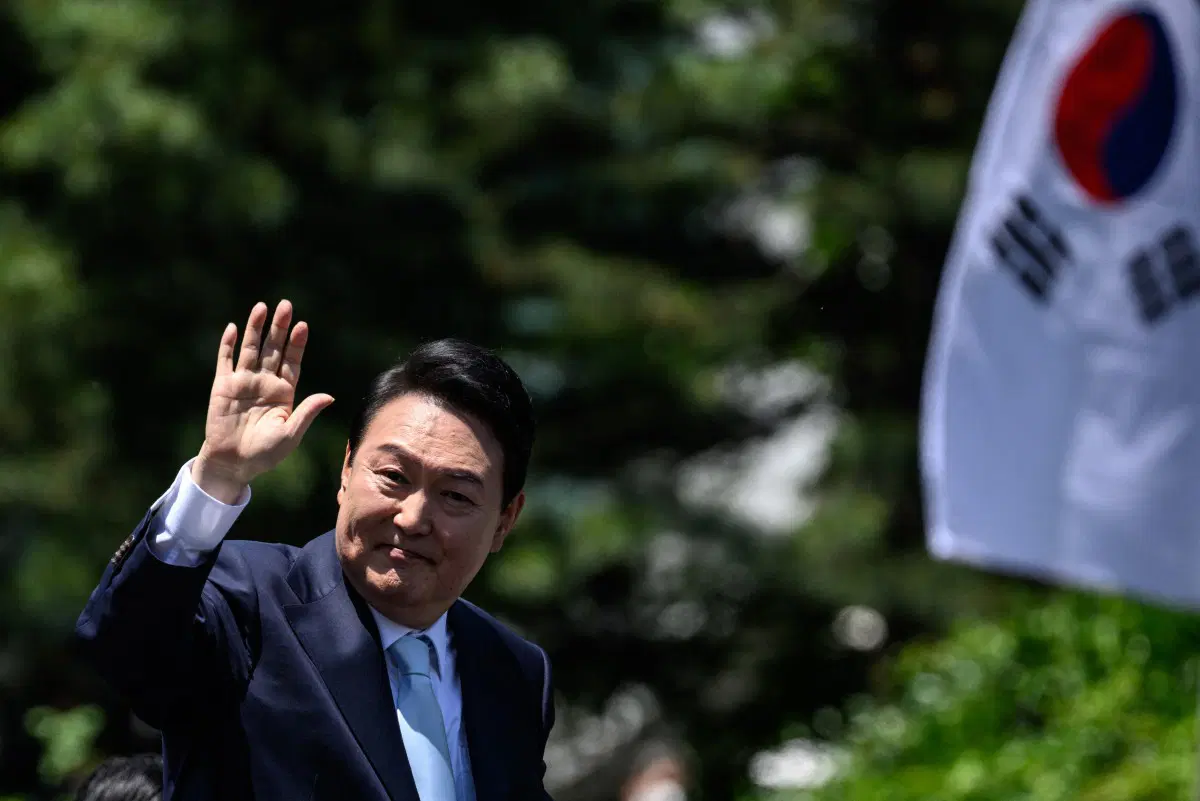
In a historic and dramatic political turn, South Korean lawmakers voted on Saturday to impeach President Yoon Suk Yeol following allegations of insurrection tied to his failed attempt to declare martial law earlier this month. The impeachment vote, carried out amid massive nationwide protests, has temporarily removed Yoon from office, pending a ruling by the Constitutional Court.
Parliament’s Landmark Decision
The National Assembly’s 300 lawmakers voted overwhelmingly in favor of impeachment, with 204 supporting the motion, 85 opposing, three abstaining, and eight votes nullified. The opposition required at least 200 votes to pass the motion and successfully garnered support from members of Yoon’s conservative People Power Party (PPP).
The vote suspends Yoon from his presidential duties while the Constitutional Court deliberates. The court has up to 180 days to decide whether to uphold or overturn the impeachment. Prime Minister Han Duck-soo has assumed the role of interim leader in the interim.
A Nation Divided
The impeachment proceedings unfolded against a backdrop of fierce public demonstrations. In Seoul, an estimated 200,000 protesters gathered outside parliament demanding Yoon’s removal. The protesters braved sub-zero temperatures, bolstered by provisions like coffee, food, and even mobile diaper-changing facilities organized by volunteers.
In contrast, around 30,000 of Yoon’s supporters rallied near Gwanghwamun Square, waving South Korean and American flags and playing patriotic songs. Among them, Choi Hee-sun, a 62-year-old supporter, expressed unwavering loyalty, saying, “Yoon had no choice but to declare martial law. I approve of every decision he has made as president.”
Opposition Calls for Justice
The main opposition Democratic Party, which led the impeachment charge, described the vote as necessary to safeguard democracy. “We can no longer endure Yoon’s madness,” party spokeswoman Hwang Jung-a declared ahead of the vote.
Opposition lawmakers accused Yoon of undermining the Constitution and jeopardizing South Korea’s democratic principles with his martial law bid. Democratic Party floor leader Park Chan-dae celebrated the impeachment as “a great victory of the people” following the vote.
Fallout and Uncertain Future
President Yoon has remained defiant, dismissing the allegations and accusing opposition lawmakers of conspiring with communist adversaries. His approval ratings, already low, have plunged to just 11%, according to a Gallup Korea poll released on Friday, while 75% of respondents supported his impeachment.
Yoon’s controversial attempt to impose martial law on December 3 followed rising tensions over protests and political dissent. The move, widely condemned as an overreach of executive power, failed to garner support from lawmakers or the military.
The Constitutional Court will now play a pivotal role in determining Yoon’s political fate. While the court previously upheld the impeachment of former President Park Geun-hye in 2017, it overturned a 2004 impeachment of then-President Roh Moo-hyun, citing insufficient grounds.
With only six judges currently seated on the court, a unanimous decision is required to uphold Yoon’s removal.
The Road Ahead
If upheld, Yoon would become the second South Korean president in history to be impeached and permanently removed from office. His suspension comes at a critical moment for South Korea, as the nation grapples with economic challenges, social unrest, and strained political unity.
For now, the nation waits as the Constitutional Court deliberates on a decision that could reshape the country’s political landscape.