The death toll from the devastating floods that struck Texas over the Fourth of July weekend has climbed to at least 104, with officials warning that the number may still rise as emergency crews continue rescue and recovery efforts across the state.
Among the victims were 27 girls and camp counselors who lost their lives when flash floods swept through Camp Mystic, a popular Christian summer camp near the Guadalupe River in Kerr County. The camp, which was housing over 750 people at the time, became the epicenter of tragedy as the river surged violently, inundating cabins and submerging trees and rooftops.
Texas Governor Greg Abbott, in a statement released Monday, said, “There is still a threat of heavy rain with the potential to cause further flooding,” adding that some 1,750 personnel, including search dogs, helicopters, and boat teams, have been deployed in the massive response operation.
President Donald Trump, addressing the national tragedy, announced plans to visit Texas on Friday. He signed a federal disaster declaration to activate emergency aid and condemned criticism suggesting his administration’s cuts to weather-related agencies had contributed to the disaster.
“Blaming President Trump for these floods is a depraved lie,” said White House Press Secretary Karoline Leavitt. “The National Weather Service provided timely and precise forecasts.”
Local residents, however, have begun to question the state’s preparedness and warning systems—particularly in a region long known as “Flash Flood Alley” for its vulnerability to sudden, violent storms. San Antonio resident Nicole Wilson, whose daughters narrowly missed attending Camp Mystic, launched a petition urging the state to adopt modernized flood alert systems.
“Five minutes of that siren going off could have saved every single one of those children,” Wilson said, visibly emotional.
Scenes from the disaster zone reveal the terrifying force of nature. The Guadalupe River rose approximately 26 feet—higher than a two-story building—in just 45 minutes. Entire cabins were swept away or left with shattered windows and thick mud covering children’s belongings. Volunteers, many with personal ties to victims, have joined the search.
“We’re helping the parents of two missing girls,” said 62-year-old Louis Deppe. “The last message they got was, ‘We’re being washed away,’ and then the phone went silent.”
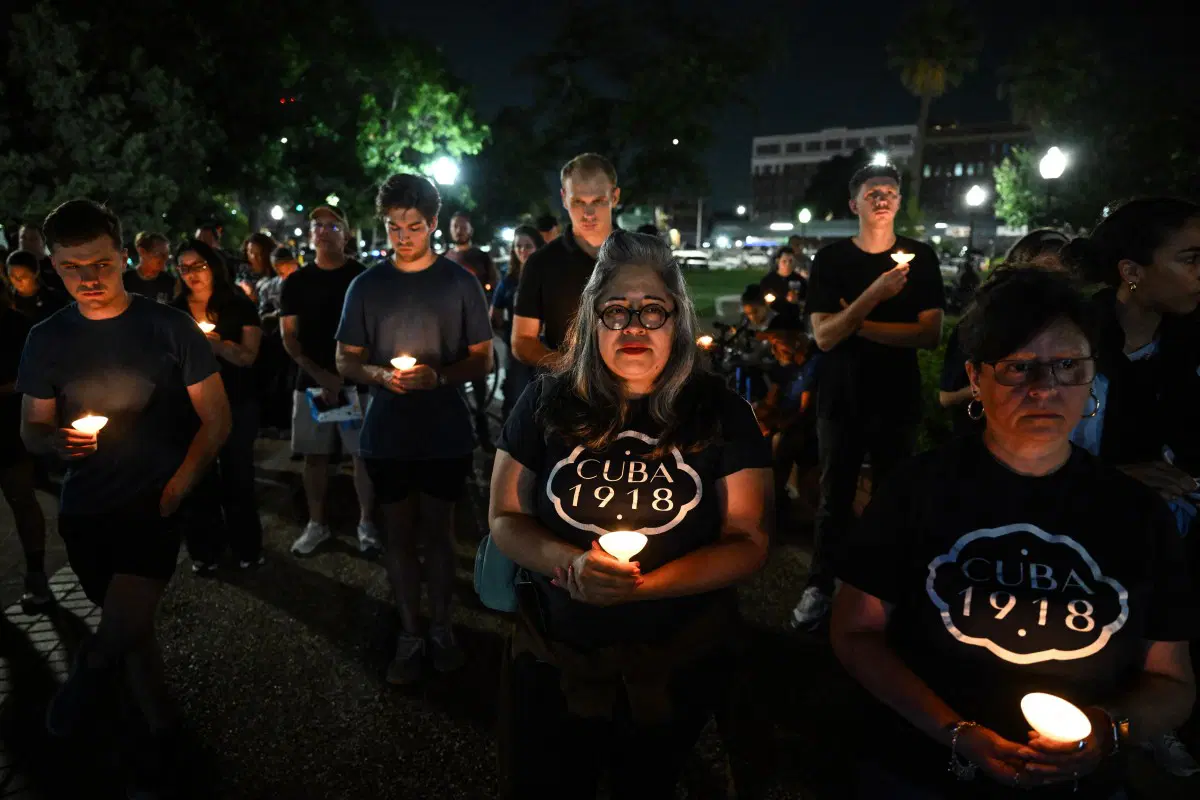
At a candlelight vigil in San Antonio, hundreds gathered to mourn, pray, and share stories. “I wouldn’t have imagined our rivers could rise that quickly,” said Rebeca Gutierrez, 29. “We need real prevention to stop this from happening again.”
Meteorologists reported that several months’ worth of rainfall fell in just a few hours, overwhelming the dry ground and triggering the catastrophic flooding. Climate scientists noted that global warming is fueling more intense and frequent weather extremes, with events like this likely to become increasingly common.
Kerr County remains the hardest hit, reporting at least 84 of the confirmed deaths, including 28 children. Camp Mystic, once a haven for forming “lifetime friendships,” has now become a symbol of heartbreak for the state.
As the floodwaters begin to recede, families, officials, and communities are left grappling with grief—and demanding accountability.