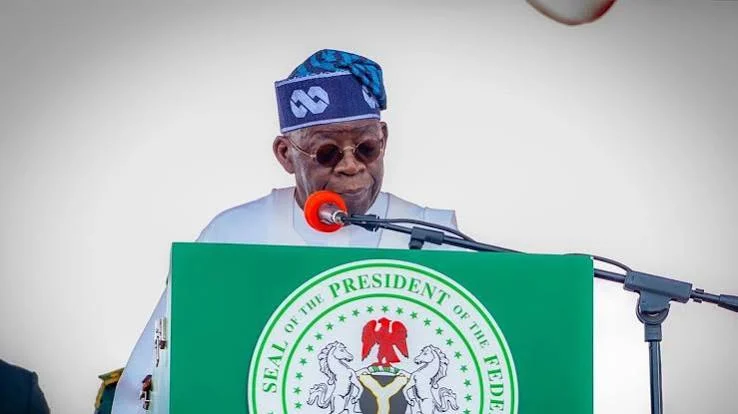
President Bola Ahmed Tinubu has called for sweeping reforms in global governance, financial systems, and healthcare infrastructure, urging the BRICS bloc and the international community to prioritize fairness, equity, and inclusion—especially for African nations.
Speaking at the 17th BRICS Summit of the Global South held in Rio de Janeiro, Brazil, on Saturday, President Tinubu emphasized the urgent need to address systemic imbalances that continue to marginalize developing and low-income countries.
“Africa has contributed the least to global emissions but suffers the most,” Tinubu said. “Justice, equity, and accessible financing must drive a new global compact, underpinned by sustainable technology transfer and ownership of solutions.”
This marked Nigeria’s first appearance at a BRICS summit as an official partner country following its admission on January 17, 2025. Nigeria became the ninth nation under the new BRICS partner-country framework introduced at the 16th Summit in Kazan, joining Belarus, Bolivia, Cuba, Kazakhstan, Malaysia, Thailand, Uganda, and Uzbekistan.
Hosted by Brazilian President Luiz Inácio Lula da Silva, the summit brought together leaders of emerging economies to shape a collective vision for the Global South. Tinubu used the opportunity to advocate for greater African representation and input in the formulation of global policies.
He urged BRICS to champion a restructured global financial order, increased climate financing for vulnerable nations, and inclusive health solutions—especially as the world prepares for COP-30.
“The next issues are financial restructuring and reevaluation of the global structure,” he stated. “Developing countries must no longer be bystanders in conversations that shape our global future.”
President Tinubu reaffirmed Nigeria’s commitment to South-South cooperation and ongoing climate initiatives such as the African Carbon Market Initiative and the Great Green Wall. He also highlighted Nigeria’s Vision 2050, which is centered on sustainable development, youth empowerment, climate action, and health equity.
“Nigeria cannot be a passive participant in global decision-making on debt relief, climate funding, or healthcare,” Tinubu said, calling for resilient health systems and greater attention to non-communicable diseases in the Global South.
Tinubu was accompanied to the summit by Nigeria’s Foreign Affairs Minister, Ambassador Yusuf Tuggar, and Minister of Finance, Mr. Wale Edun.
Nigeria’s inclusion in BRICS under Brazil’s 2025 presidency reflects shared priorities such as global governance reform and stronger South-South alliances. As Africa’s most populous nation and one of its largest economies, Nigeria is widely regarded as a strategic addition to the bloc’s evolving architecture.
President Tinubu’s address set the tone for Nigeria’s active participation in global policy dialogues and affirmed the country’s readiness to lead in shaping inclusive, forward-looking international frameworks.