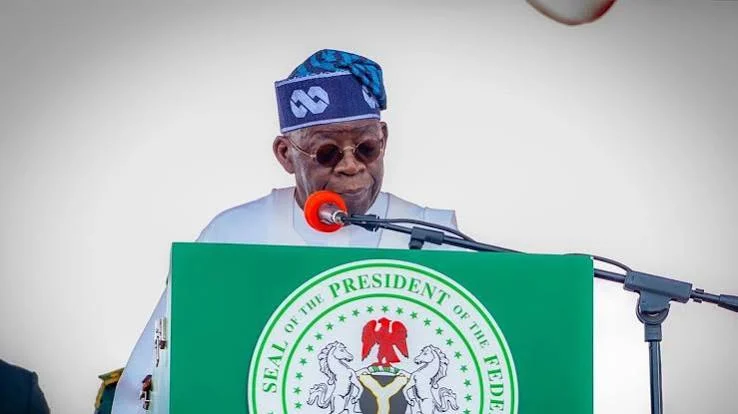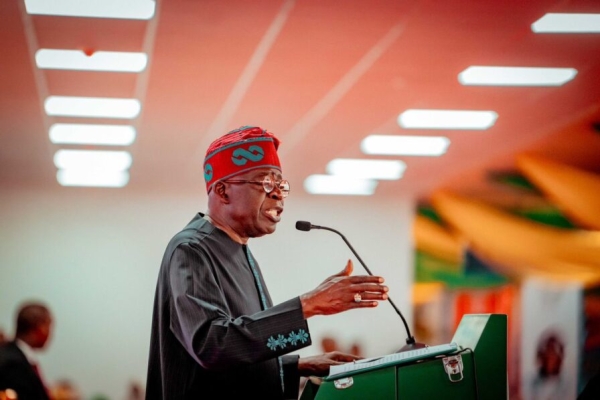
President Bola Ahmed Tinubu has described the seemingly good life Nigerians experienced before his administration as an illusion that threatened to collapse the nation. Speaking on Saturday during the 34th and 35th convocation ceremonies at the Federal University of Technology Akure (FUTA) in Ondo State, Tinubu defended the removal of fuel subsidies and the unification of exchange rates, emphasizing the measures were necessary to avert economic disaster.
Tinubu, represented by Professor Wahab Egbewole, Vice-Chancellor of the University of Ilorin, said his administration inherited an economy burdened by heavy debts resulting from unsustainable subsidies.
Subsidy and Exchange Rate Reforms
During his inauguration on May 29, 2023, Tinubu declared the removal of the petrol subsidy. Subsequently, the Central Bank of Nigeria (CBN) announced the unification of all foreign exchange market segments. Tinubu highlighted these moves as pivotal steps to stabilize the economy and prevent national collapse.
“Before now, subsidies were designed to support the poor and enhance the quality of life for Nigerians. Yet, it became apparent that the very people these policies sought to assist were the ones suffering the most,” Tinubu said.
“The supposed good life was a facade—an unsustainable illusion that could have led to a total collapse of our nation. The strategic decision to end fuel subsidies and unify exchange rates was made to salvage our children’s future and bring the country back from the brink of collapse.”
Acknowledging the economic challenges that have followed, Tinubu expressed regret for the difficulties citizens face. “I am not unaware of the consequences of these tough decisions. I sincerely wish there were softer options,” he added.
Optimism for Economic Recovery
Despite the challenges, Tinubu expressed confidence that the reforms are yielding positive results. He noted that macroeconomic indicators are improving daily, while efforts to strengthen the microeconomy—directly affecting citizens—are gradually taking shape.
The president reiterated his administration’s focus on transitioning Nigeria from a consumption-driven economy to one centered on production across all sectors.
Addressing Brain Drain
Tinubu used the platform to address the migration of young Nigerians seeking greener pastures abroad, describing the trend as a significant contributor to brain drain across critical sectors.
“It is disheartening to witness our youths and intellectuals, on whom we have heavily invested, leaving the country in search of opportunities elsewhere,” Tinubu lamented. “This exodus is not the solution to our problems. We must rekindle our patriotism and believe in Nigeria’s potential to turn things around.”
He called on the graduating students and Nigerians at large to join hands with his administration to restore the nation’s lost glory.
A Call for Patriotism and Renewed Hope
Tinubu assured Nigerians that brighter days lie ahead, reiterating the commitment of his “Renewed Hope” agenda to achieving a better and greater nation.
“After rain comes sunshine. The brighter days are almost here,” he said, urging Nigerians to remain steadfast during this period of transition.
The president’s remarks have sparked debates nationwide, with many acknowledging the necessity of reforms while expressing concerns about their immediate impact on citizens. As Tinubu’s administration forges ahead, the question remains whether these policies will ultimately deliver the promised economic transformation.