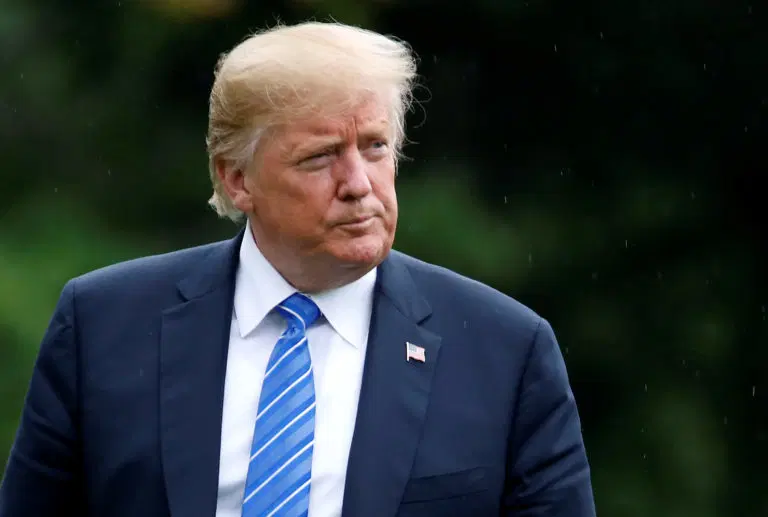
WASHINGTON D.C. — In a high-stakes diplomatic engagement, U.S. President Donald Trump is set to host the leaders of five West African nations — Senegal, Liberia, Guinea-Bissau, Mauritania, and Gabon — at the White House on Wednesday, signaling a potential shift in U.S.-Africa relations from aid dependence to strategic partnerships rooted in trade and investment.
The working lunch, taking place in the historic State Dining Room, is expected to cover a range of issues including commerce, security, and the growing influence of global powers like China and Russia across the African continent. While the White House has remained tight-lipped about the detailed agenda, African officials have confirmed that trade and economic cooperation will be central to the discussions.
The meeting follows the Trump administration’s recent closure of the U.S. Agency for International Development (USAID), part of a broader ideological pivot from what the administration calls a “charity-based model” to one focused on mutual economic benefits.
Liberia’s President Joseph Boakai, speaking through his press secretary Kula Fofana, emphasized that Liberia was attending with hopes of moving “beyond aid” and finding lasting trade partnerships. “Our interest is to look more to trade and engagement partners who will invest,” Fofana told AFP.
Echoing similar sentiments, Gabonese presidential spokesman Theophane Biyoghe described the gathering as a moment to align with U.S. interests, particularly “centred around the industrialisation of our economy.”
Despite the focus on commerce, security will likely be a crucial part of the talks. The five Atlantic Coast nations have faced rising regional instability and drug trafficking concerns, notably in Guinea-Bissau — a known transit point for cocaine smuggled from Latin America into Europe. In April, the country handed over four convicted drug traffickers to the U.S. Drug Enforcement Administration.
Guinea-Bissau’s President Umaro Sissoco Embaló, who hailed the White House invitation as “very important,” stated prior to his departure that he hopes the talks will unlock U.S. economic support and investment in key sectors.
Geopolitics also looms large over the luncheon, as China and Russia expand their footprints in West Africa. China has invested heavily in infrastructure across the region, while Russia has extended political support to the Alliance of Sahel States (AES) — a coalition of junta-led nations in neighboring Mali, Niger, and Burkina Faso. These developments are expected to be addressed behind closed doors as Washington seeks to regain strategic influence in Africa.
Notably, the five visiting presidents will not hold a joint press conference with Trump — a decision analysts believe is aimed at avoiding public missteps. Past meetings between Trump and other African leaders have occasionally drawn controversy, including a meeting with South Africa’s President Cyril Ramaphosa, during which Trump referenced a conspiracy theory about “white genocide” in the country.
Adding to the complexity of the gathering is the fact that several of the visiting nations — including Gabon, Liberia, Mauritania, and Senegal — are currently under consideration for inclusion in a proposed U.S. travel ban, according to a recent internal administration memo.
Despite the political uncertainty, today’s lunch presents a rare window for five relatively small West African nations to advocate for deeper ties with the world’s largest economy — a moment that could redefine their future engagement with the United States.