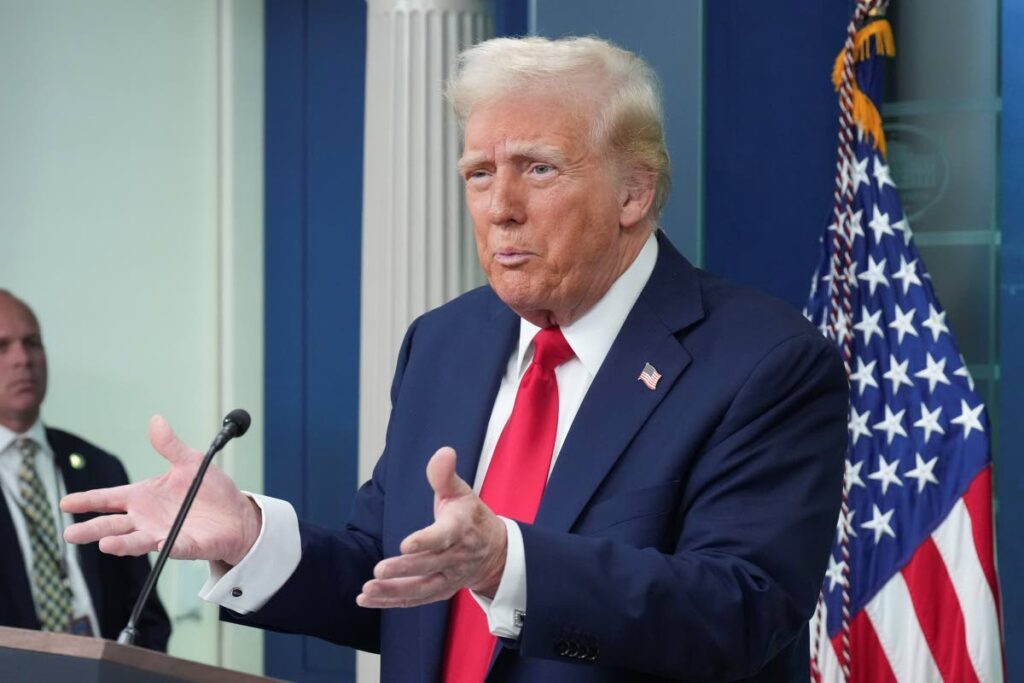
United States President Donald Trump on Saturday announced a sweeping increase in global import duties to 15 percent, a day after the Supreme Court of the United States ruled that much of his tariff program was unlawful.
In a post on his Truth Social platform, Trump described the court’s 6–3 decision as “extraordinarily anti-American” and said his administration would raise tariffs to what he called the “fully allowed, and legally tested, 15% level.” The move effectively doubles down on his aggressive trade policy despite the judicial rebuke.
The Supreme Court had rejected Trump’s authority to impose sweeping tariffs under a 1977 economic emergency powers law, dealing a significant blow to one of his signature economic initiatives since returning to office 13 months ago. Shortly after the ruling, Trump initially unveiled a new 10 percent global levy using a different legal mechanism before escalating it to 15 percent.
In a sharp response to the ruling, the president criticized conservative justices who sided with the majority, accusing them of “disloyalty” and alleging they were influenced by foreign interests. However, he praised Justices Clarence Thomas, Samuel Alito and Brett Kavanaugh — the three dissenting conservatives — for what he called their “strength and wisdom.”
The new 15 percent tariff is temporary under existing law, with a 150-day limit. According to a White House fact sheet, exemptions will remain for sectors under separate investigations, including pharmaceuticals, as well as goods covered by the United States-Mexico-Canada Agreement. Trading partners that negotiated separate tariff arrangements with Washington will also face the new global levy.
The court’s ruling does not affect sector-specific duties already imposed on steel, aluminum and other goods. Ongoing government investigations could result in additional targeted tariffs.
Financial markets responded cautiously. Wall Street shares edged higher on Friday following the decision, which analysts said had been widely anticipated. Business groups largely welcomed the court’s ruling, with the National Retail Federation saying it provided “much-needed certainty” for companies navigating shifting trade policies.
During court proceedings, the administration indicated that companies would receive refunds if the tariffs were ultimately deemed unlawful. However, the Supreme Court did not address the refund issue directly. Justice Kavanaugh warned that any repayment process could become complicated, describing it as potentially “a mess.” Trump, for his part, predicted years of litigation over the matter.
International reaction has been measured but watchful. German Chancellor Friedrich Merz said he would consult with European allies to formulate a coordinated response ahead of a planned visit to Washington in early March.
At home, Pennsylvania Governor Josh Shapiro, a Democrat, urged the president to heed the court’s decision, calling for an end to what he described as “chaotic tariffs” that he said were harming farmers and small businesses.
The latest tariff hike adds fresh uncertainty to global trade, extending a policy approach that has repeatedly seen duties announced, revised and revoked over the past year as the administration seeks leverage in negotiations with both allies and rivals.