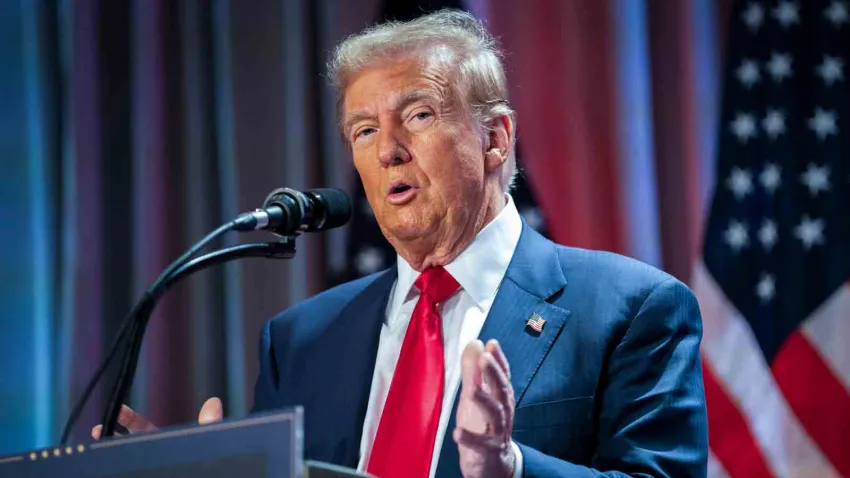
In a move that signals a major escalation of his protectionist trade agenda, U.S. President Donald Trump on Thursday announced sweeping new tariffs on pharmaceuticals, heavy-duty trucks, home renovation products, and furniture, reigniting a global trade war and rattling markets around the world.
The late-evening announcement marks the administration’s most aggressive trade action since the surprise introduction of reciprocal tariffs last April targeting nearly all U.S. trading partners.
Beginning October 1, a 100% tariff will apply to all branded or patented pharmaceutical products unless the companies producing them are building their manufacturing plants in the United States. “We will be imposing a 100% tariff on any branded or patented pharmaceutical product, unless a company is building their pharmaceutical manufacturing plant in America,” Trump declared on his Truth Social platform.
The policy has already drawn international criticism. Australian Health Minister Mark Butler blasted the decision, calling it “not in the interest of American consumers,” especially given the extent to which U.S. exporters benefit from free trade with Australia. Australia exported an estimated $1.35 billion in pharmaceutical products to the United States in 2024, according to the UN Comtrade Database.
Trump also announced a 25% tariff on all heavy trucks manufactured outside the United States, citing the need to protect domestic companies like Peterbilt, Kenworth, Freightliner, and Mack Trucks. “This is for many reasons, but above all else, for national security purposes!” he wrote.
The move follows a Section 232 national security investigation into truck imports earlier this year, a trade law provision granting the president broad authority to impose tariffs when foreign products are deemed a threat to national security.
The new measures hit foreign competitors such as Sweden’s Volvo and Germany’s Daimler, whose shares plunged in after-hours European trading following the announcement.
In addition, Trump targeted home renovation and furniture imports, announcing a 50% tariff on kitchen cabinets, bathroom vanities, and related products and a 30% tariff on upholstered furniture. According to the U.S. International Trade Commission, imports accounted for 60% of all furniture sold in 2022, including 86% of wood furniture and 42% of upholstered pieces, much of it from Asia.
The news triggered a sharp sell-off in shares of major U.S. furniture retailers like Wayfair and Williams Sonoma, both heavily reliant on imported goods.
Economists warn that the sweeping tariffs could stoke inflation in the world’s largest economy. Trump’s administration has already imposed a baseline 10% tariff on all countries, with steeper rates for nations that export significantly more to the U.S. than they import.
The new measures also deepen Trump’s ongoing efforts to use trade policy as a tool for broader political and security objectives. He has previously imposed additional tariffs on Canada, Mexico, and China, citing issues ranging from illegal immigration to fentanyl trafficking.
It remains unclear how the latest round of tariffs, set to take effect next week, will interact with existing trade measures. But one thing is certain: Trump’s latest salvo marks a dramatic escalation in his bid to reshape global trade and rebuild American manufacturing through aggressive protectionism.