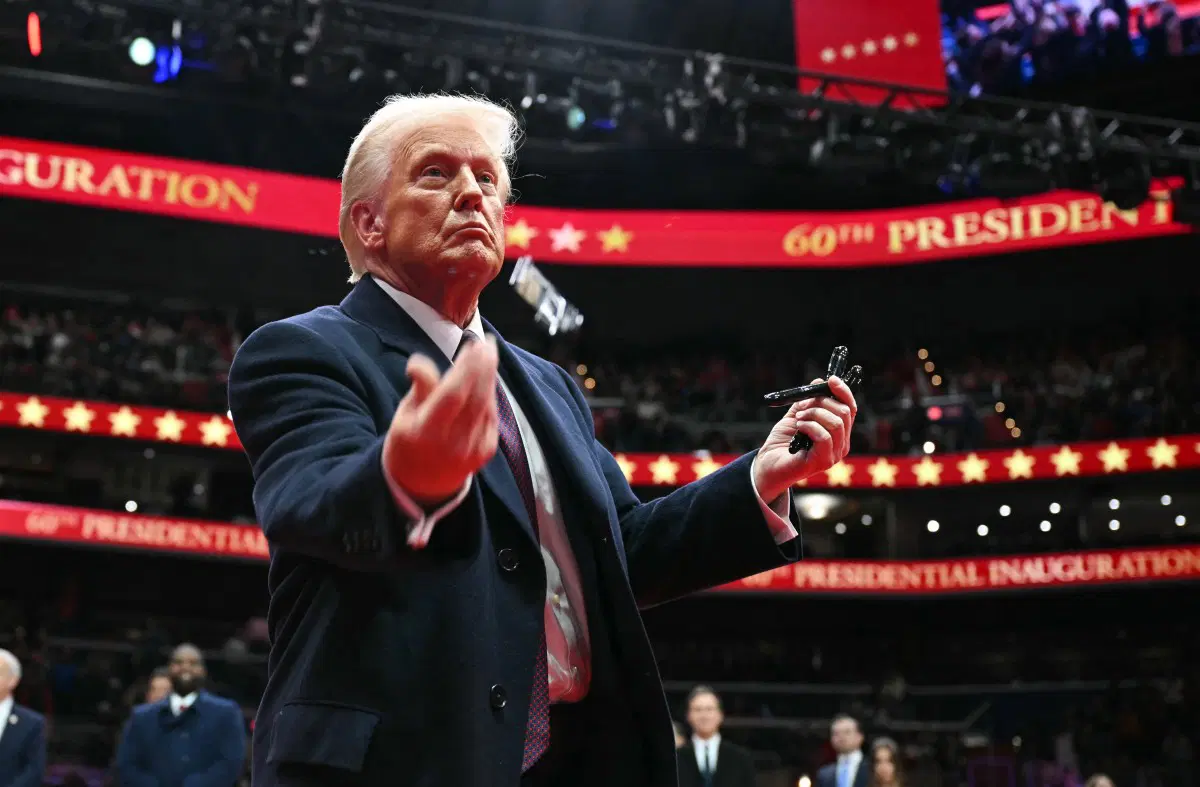
In a sweeping move on his first day back in office, President Donald Trump signed an executive order on Monday aimed at ending birthright citizenship in the United States. The directive, titled “Protecting the Meaning and Value of American Citizenship,” targets children born on U.S. soil to parents who are undocumented immigrants or on temporary visas.
The Executive Order Explained
The order directs federal agencies to cease issuing citizenship documentation, including passports and Social Security numbers, to children born in the U.S. unless at least one parent is a U.S. citizen or a lawful permanent resident. The policy, set to take effect on February 19, 2025, redefines eligibility criteria for citizenship, a right traditionally guaranteed under the 14th Amendment.
“This action restores integrity to our immigration system,” Trump declared during the signing ceremony. “American citizenship is a privilege, not an entitlement.”
The executive order also establishes a task force to oversee its implementation, with the Department of Homeland Security (DHS) and the State Department leading enforcement efforts.
A Reversal of Longstanding Policy
Birthright citizenship, enshrined in the 14th Amendment of the U.S. Constitution, has granted automatic citizenship to children born in the U.S. regardless of their parents’ immigration status since its ratification in 1868. Trump’s executive order marks an unprecedented attempt to reinterpret this constitutional provision, a move experts predict will face immediate legal challenges.
Impact on Families and Immigrant Communities
The new policy is expected to affect thousands of families, particularly those with mixed immigration statuses. Critics argue it could leave many children stateless, lacking citizenship in both the U.S. and their parents’ home countries.
Immigration advocates have condemned the order, with groups like the American Civil Liberties Union (ACLU) vowing to challenge it in court. “This is a blatant violation of the Constitution and an attack on vulnerable communities,” said Omar Jadwat, Director of the ACLU’s Immigrants’ Rights Project.
Legal and Political Ramifications
The order is widely viewed as a legal and political gambit, with constitutional scholars questioning its viability. The 14th Amendment’s Citizenship Clause explicitly states: “All persons born or naturalized in the United States, and subject to the jurisdiction thereof, are citizens of the United States.” Opponents argue that any change to this provision requires a constitutional amendment, not an executive order.
Congressional Democrats have condemned the move, with Senate Majority Leader Chuck Schumer calling it “a dangerous overreach.” Republicans, however, are divided, with hardline immigration hawks applauding the decision while moderates express concerns about its legal sustainability.
Broader Immigration Crackdown
The order is part of a broader set of immigration policies unveiled by the Trump administration, including plans to reinstate the border wall project, ramp up deportations, and tighten asylum rules. Analysts suggest these moves are aimed at energizing Trump’s base and setting the stage for prolonged legal battles over immigration policy.
What’s Next?
As February 19 approaches, legal experts anticipate a flurry of lawsuits seeking to block the order’s implementation. Many predict the issue will ultimately be decided by the Supreme Court, which now holds a conservative majority that could play a pivotal role in the case.
For now, the executive order has thrust the contentious issue of birthright citizenship into the national spotlight, reigniting debates over immigration, constitutional rights, and the future of American identity.