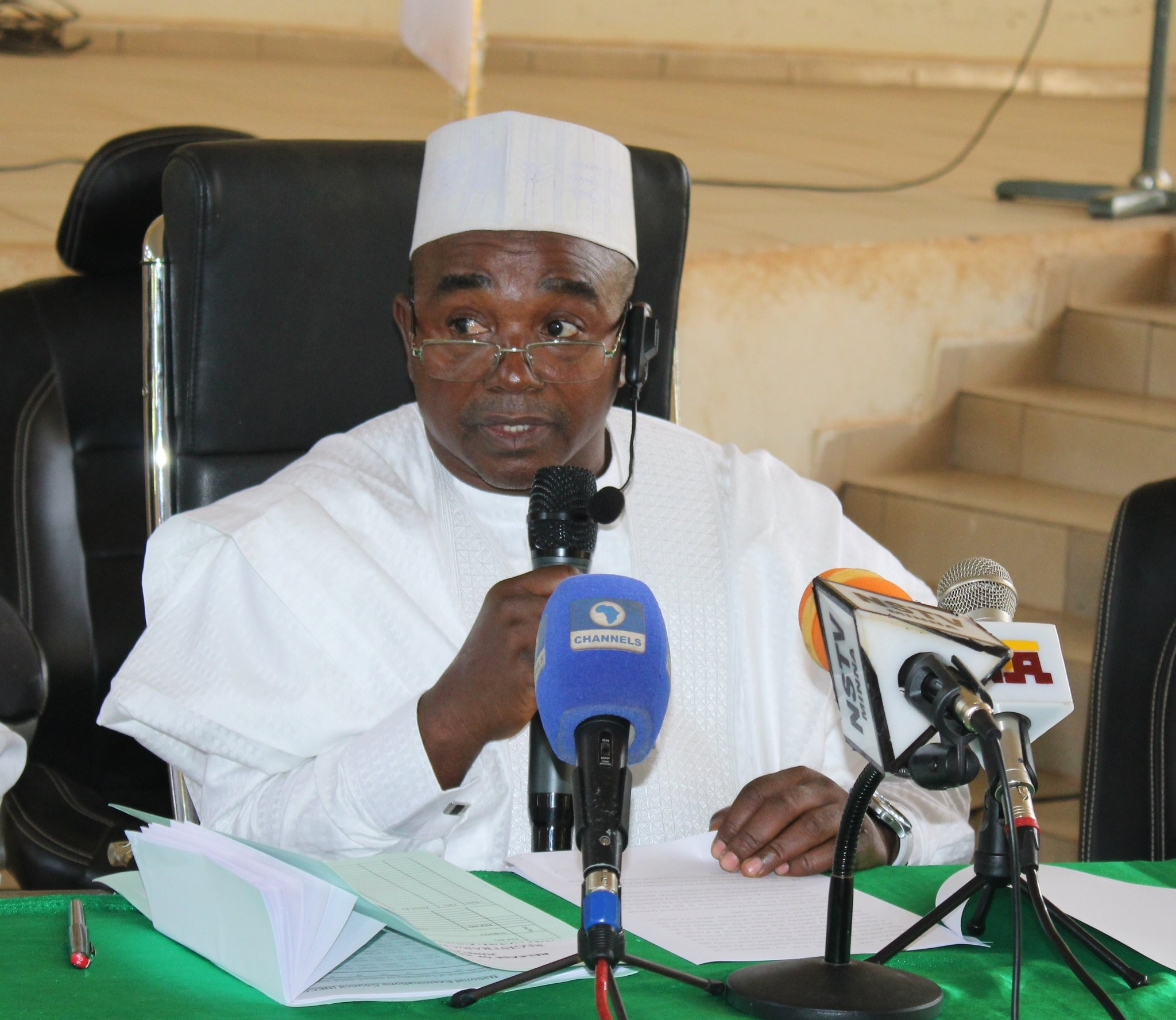
Abuja, Nigeria — The Registrar of the National Examinations Council (NECO), Professor Ibrahim Wushishi, has revealed that universities in the United Kingdom are showing interest in using NECO results for admitting Nigerian students. During an interactive session with journalists in Abuja on Wednesday, Wushishi disclosed that two UK universities have inquired about the credibility of NECO examinations as a basis for admission.
Professor Wushishi discussed the ongoing digitalisation efforts and the potential shift to Computer-Based Testing (CBT) for NECO exams. He highlighted the challenges associated with this transition due to the complexity and scale of NECO’s assessments. NECO administers exams to nearly 1.5 million students annually across 76 subjects and over 150 different papers.
“NECO is the largest examination body in Nigeria by the number of exams we conduct,” Wushishi stated. “Migrating to CBT is a critical issue because our exams cover a wide range of subjects and include complex essay formats, unlike JAMB, which primarily uses multiple-choice questions.”
He suggested a gradual approach to implementing CBT, starting with exams like the common entrance examination that already use a multiple-choice format. “Experts need to thoroughly evaluate the specifics of our exams before we can fully transition to CBT,” he added.
Regarding examination integrity, Professor Wushishi assured that NECO has robust mechanisms in place to prevent malpractices and exam leakages in the upcoming SSCE internal examinations scheduled for June. He emphasized the council’s commitment to continuous sensitisation, data protection, and the use of sophisticated technologies to safeguard the examination process.
“We are enhancing our systems to protect candidates’ information and to detect any attempts at malpractice,” Wushishi said. “We are confident that there will be no exam leakages in our forthcoming examinations.”
The interest from UK universities in NECO results marks a significant recognition of the examination body’s credibility and the quality of education in Nigeria, potentially paving the way for more Nigerian students to pursue higher education abroad.