The United States military has intercepted multiple Iranian-flagged oil tankers in Asian waters, redirecting their routes in a move that underscores Washington’s tightening enforcement of sanctions against Iran and raises fresh concerns over global energy stability.
According to shipping and security sources, at least three vessels were stopped and diverted from positions near India, Malaysia, and Sri Lanka. The action is part of an expanded maritime effort led by the United States Central Command to enforce an ongoing blockade targeting Iranian oil exports.
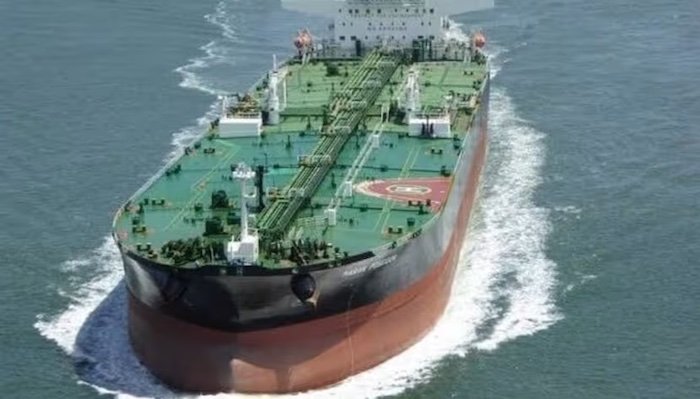
Among the affected vessels was the supertanker Deep Sea, which had been partially loaded with crude and was last tracked off Malaysia’s coast. Another tanker, Sevin, carrying roughly 65 percent of its one-million-barrel capacity, was also rerouted after being sighted in nearby waters.
A third vessel, Dorena, fully loaded with an estimated two million barrels of crude, was intercepted near southern India. US Central Command confirmed the tanker was placed under the escort of a US Navy destroyer in the Indian Ocean after allegedly attempting to bypass the blockade.
Shipping sources further suggested that a fourth tanker, Derya, may have been involved in similar actions after failing to offload cargo in India before the expiration of a US waiver on Iranian crude imports.
While the US military has not released full operational details, officials confirmed that 29 vessels have been ordered to turn back or return to port since the blockade began, signaling a broader campaign to curb Iran’s oil shipments.
The developments come amid rising tensions in the region, particularly around the Strait of Hormuz, a critical global energy corridor through which nearly one-fifth of the world’s oil and gas supplies pass. Recent disruptions, including reported Iranian actions against commercial vessels, have contributed to heightened volatility in international markets.
Security analysts note that US operations are increasingly extending beyond the Strait of Hormuz into open waters, a shift aimed at minimizing risks associated with potential maritime threats such as floating mines.
With diplomatic efforts showing little progress nearly two months into the standoff involving the United States, Israel, and Iran, the latest interceptions highlight a more assertive posture at sea, even as uncertainty continues to cloud ceasefire prospects and global energy supply chains.