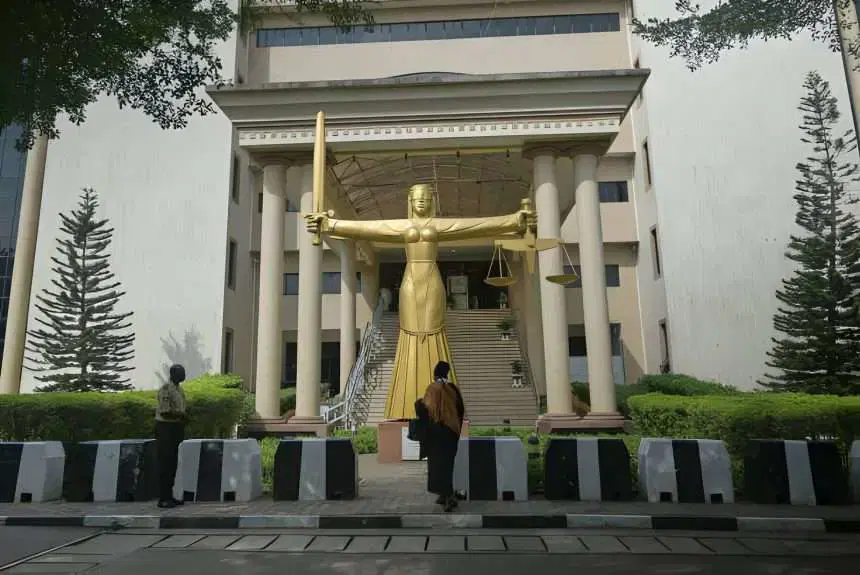
A Federal High Court in Abuja has nullified key deadlines contained in the revised 2027 general election timetable issued by the Independent National Electoral Commission, ruling that the commission exceeded its legal powers under the Electoral Act 2026.
The judgement, delivered by Justice Mohammed Umar, invalidated several timelines imposed by INEC relating to party primaries, submission of candidates’ particulars, withdrawal and replacement of candidates, publication of final candidate lists, and campaign deadlines.
The court held that the timelines set by INEC were inconsistent with provisions of the Electoral Act 2026 and therefore could not stand.
The ruling followed a suit filed by the Youth Party against INEC. The case, marked FHC/ABJ/CS/517/2026, challenged the commission’s authority to prescribe deadlines that effectively shortened statutory periods already guaranteed under the law.
According to the Certified True Copy of the judgement, the plaintiff argued that Sections 29, 82 and 84(1) of the Electoral Act did not empower INEC to dictate when political parties must conduct primaries for nominating candidates ahead of the 2027 elections.
Justice Umar agreed with the argument, stating that Section 29(1) of the Electoral Act clearly provides that political parties have up to 120 days before an election to submit candidates’ particulars, and that INEC lacked the authority to reduce that period through administrative guidelines.
The court also cited Section 31 of the Electoral Act, which allows political parties to withdraw or substitute candidates up to 90 days before an election. Justice Umar ruled that INEC could not impose earlier deadlines for such actions.
In addition, the court held that the electoral body had no statutory authority under Section 32 of the Act to publish the final list of candidates earlier than the minimum 60-day period stipulated by law.
Justice Umar further ruled that INEC could not legally mandate political campaigns to end two days before elections, saying such a directive was unsupported by Section 98 of the Electoral Act 2026.
The court also clarified that timelines relating to submission of membership registers for party primaries do not apply to primaries conducted solely for replacing withdrawn candidates.
Consequently, the judge set aside all aspects of the revised timetable found to be inconsistent with the Electoral Act.
The judgement is expected to significantly reshape political calculations ahead of the 2027 elections, especially for politicians who lost party primaries and may now seek alternative platforms to contest elective positions.
Under the nullified timetable, political parties had been required to submit membership registers by May 10 and conclude primaries, withdrawals and replacement processes before the end of May.
The exercise had already generated controversy within several parties, particularly the ruling All Progressives Congress, where allegations of candidate imposition and internal disputes triggered protests and withdrawals in some states.
INEC is reportedly reviewing the judgement and considering an appeal.
A senior official of the commission, who spoke anonymously, said the electoral body was studying the court’s decision and would likely challenge it at the appellate court.
Meanwhile, the African Democratic Congress welcomed the ruling, describing it as a validation of the party’s earlier objections to INEC’s guidelines.
In a statement signed by its National Publicity Secretary, Mallam Bolaji Abdullahi, the party said the judgement removed restrictions that had hindered politicians from changing parties after losing primaries.
The party added that the ruling could trigger major defections from the APC in the coming months.
Similarly, the Peoples Redemption Party described the judgement as a boost for Nigeria’s democratic culture.
The party’s National Publicity Secretary, Muhammed Ishaq, said the decision restored powers that properly belonged to political parties and reduced excessive control over internal party processes.
He added that while INEC might still appeal the ruling, the judgement had broadened democratic participation and strengthened party autonomy ahead of the 2027 elections.