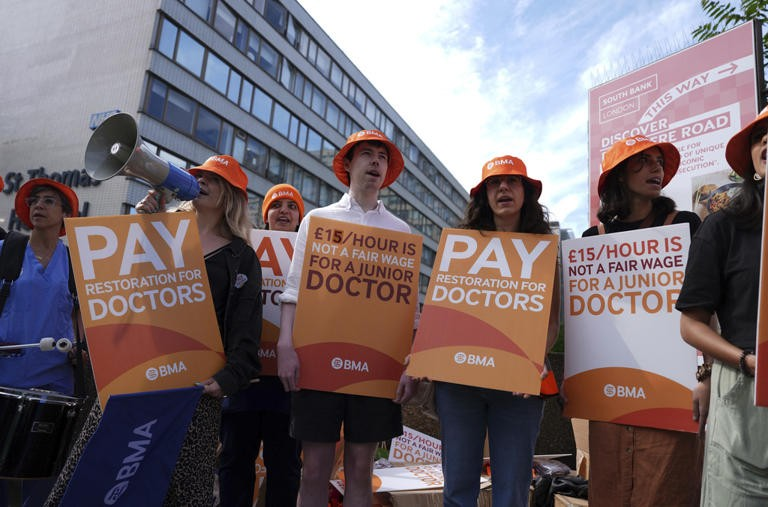
Junior doctors in England commenced a five-day strike on Thursday, intensifying the spotlight on the National Health Service (NHS) just one week before the general election. This action underscores the ongoing issues within the publicly funded healthcare system, which has become a significant election issue.
This latest strike is part of a series of nearly a dozen similar walkouts by junior doctors—those below the specialist or consultant level—over the past 18 months. The NHS is already struggling with a significant backlog of cases due to the COVID-19 pandemic, and the frequent strikes have further exacerbated the situation.
Patients across England face delays in operations and the commencement of cancer treatments. Additionally, an increasingly dissatisfied public is enduring long waits for appointments with general practitioners. A recent survey revealed that less than a quarter of Britons are currently satisfied with the NHS, marking an unprecedented level of discontent.
The striking doctors are demanding a 35 percent “pay restoration” to address the ongoing cost-of-living crisis. They have expressed a willingness to call off the strike if Prime Minister Rishi Sunak, of the Conservative Party, presents a credible commitment to increase their pay.
The strike is set to continue until Tuesday, ending just two days before the general election on Thursday. The main opposition Labour Party is currently leading in the polls. Labour’s health spokesperson, Wes Streeting, has indicated that a Labour government would not meet the 35 percent pay demand but is open to discussions.
The past year has seen workers from various sectors, including teachers and train drivers, stage walkouts due to decades-high inflation in 2023. While many of these disputes have been resolved by the government, quasi-public agencies, and private sector firms, the junior doctors’ pay dispute remains unresolved.
The government has argued that the doctors’ pay demands are unaffordable due to strained public finances and has accused the strike organizers of having political motivations. As the election approaches, the handling of the NHS and the doctors’ strikes will likely remain at the forefront of public and political discourse.