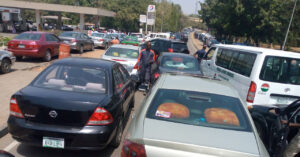
The Federal Capital Territory (FCT) witnessed a deepening crisis in the downstream sector of the petroleum industry as Premium Motor Spirit (PMS) scarcity intensified on [Yesterday’s Date]. The situation unfolded just a day after the Nigerian National Petroleum Company Limited (NNPCL) firmly rejected the return of subsidies on the much-needed product. Frustrated motorists were greeted with shuttered filling stations and long queues at the few that managed to dispense fuel.
This concerning turn of events occurred following a meeting between fuel marketers and the Nigerian Midstream and Downstream Petroleum Regulatory Authority (NMDPRA). Adding to the chaos, black market operators reappeared, selling PMS in makeshift containers at a steep price of N1,000 per liter.
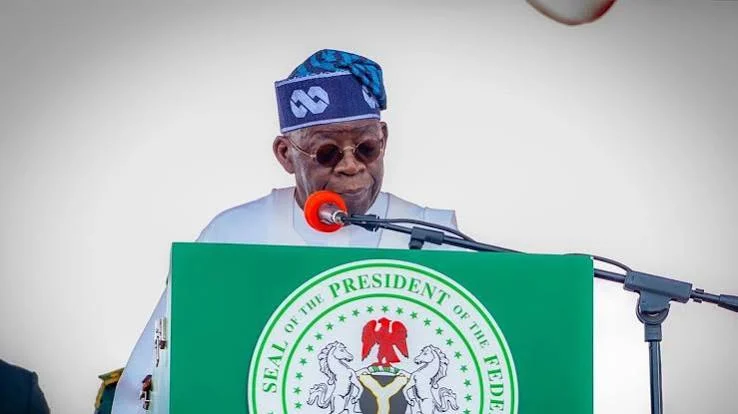
Retail prices surged at the pumps, with many independent retailers charging N625 per liter, while NNPCL, the state-run entity, provided a slightly lower rate at N613 per liter. This predicament unfolded despite previous assurances from President Bola Tinubu that there would be no further increases in petrol prices, even amidst the ongoing deregulation of the downstream market, emphasizing that the current price would remain unchanged.
Various industry stakeholders, including the National Association of Road Transport Owners (NARTO), Major Oil Marketers Association of Nigeria (MOMAN), Depot and Petroleum Marketers Association of Nigeria (DAPPMAN), expressed deep concerns regarding the ramifications of the downstream sector’s deregulation. They stressed the urgent need for the Federal Government to ensure the availability of foreign exchange at subsidized rates.
Marketers highlighted the crippling impact on businesses within the sector, emphasizing that the current pump price of PMS did not align with market realities. This discrepancy was attributed to NNPCL’s dominant role, facilitated by its access to foreign exchange, which private marketers struggled to obtain through the Importers and Exporters (I&E) window.
Additionally, the industry stakeholders called on the government to put an end to the dollarization of local activities, particularly in operations conducted by the Nigerian Maritime Administration and Safety Agency (NIMASA) and the Nigerian Ports Authority (NPA).