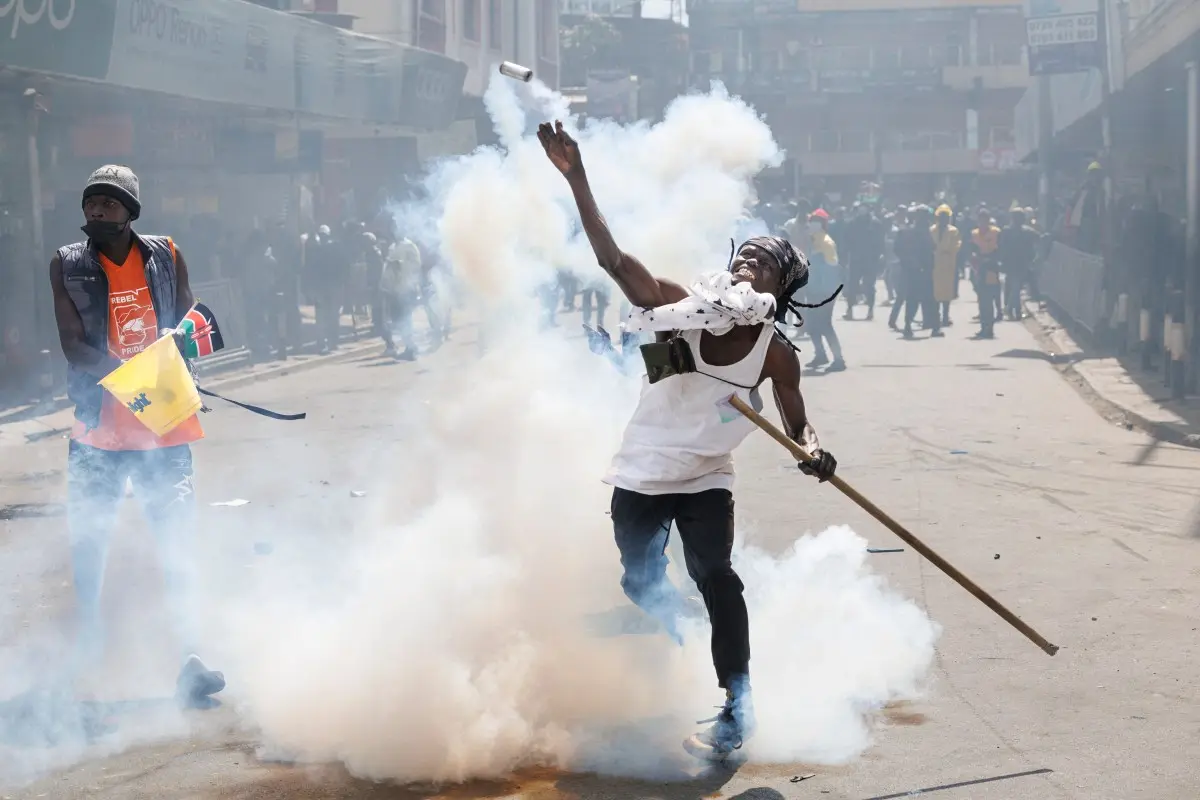
NAIROBI, Kenya — The death toll from recent protests in Kenya has risen to 13, as anti-tax hike demonstrations turned violent, with police opening fire on protesters who subsequently ransacked parliament. The unrest has led President William Ruto’s government to deploy the military in response to the escalating crisis.
The protests, which initially began peacefully last week, saw thousands of demonstrators marching through the capital, Nairobi, and other parts of the country to oppose the government’s proposed tax increases. However, the situation took a dramatic turn on Tuesday afternoon when tensions escalated, resulting in police firing live rounds at the crowds.
The violence culminated in unprecedented scenes at the parliament complex, which was set ablaze and extensively damaged by the protesters. Defence Minister Aden Bare Duale announced the deployment of the army to support the police in managing what he described as a “security emergency.”
Simon Kigondu, president of the Kenya Medical Association, reported that the death toll currently stands at 13, although the number could rise. “I have never seen such a level of violence against unarmed people,” Kigondu said.
The aftermath of the protests has left the nation in shock, with major newspapers highlighting the chaos. The Standard newspaper’s headline read “Deaths, Mayhem,” while the Daily Nation described the situation as “Pandemonium,” noting that the foundations of the country had been deeply shaken.
Kenyatta National Hospital in Nairobi reported treating 160 people, some with soft tissue injuries and others with bullet wounds, following the clashes. In a late-night press briefing, President Ruto condemned the violence and warned that his government would take a tough stance against what he termed “violence and anarchy.”
“It is not in order or even conceivable that criminals pretending to be peaceful protesters can reign terror against the people, their elected representatives, and the institutions established under our constitution and expect to go scot-free,” Ruto said.
The intensity of opposition to the tax proposals, largely driven by young Kenyans, has caught the government off guard. The protests have been fueled by long-standing grievances over the rising cost of living, exacerbated by the proposed tax hikes in the 2024 finance bill. The government argues that the increases are necessary to service the country’s massive debt, which stands at approximately 10 trillion shillings ($78 billion), equivalent to about 70 percent of Kenya’s GDP.
Despite rolling back some controversial tax proposals, the government still plans to increase fuel prices and export duties. The treasury has warned of a significant budget shortfall of 200 billion shillings following the modifications to the tax hikes.
The international community has expressed alarm over the violence, with the White House calling for calm and several Western nations, including Canada, Germany, and Britain, expressing shock over the scenes outside the Kenyan Parliament. UN Secretary-General Antonio Guterres and the head of the African Union Commission, Moussa Faki Mahamat, have also voiced their deep concern.
Veteran opposition leader Raila Odinga, head of the Azimio coalition, accused the government of deploying “brute force on our country’s children.” Rights watchdogs have also accused the authorities of abducting protesters, although the police have not responded to requests for comment.
As Kenya grapples with the aftermath of the protests and the ongoing economic challenges, the call for a more sustainable and equitable resolution to the nation’s fiscal issues continues to grow. With a third of Kenya’s 52 million population living in poverty, the need for effective governance and economic stability remains critical.