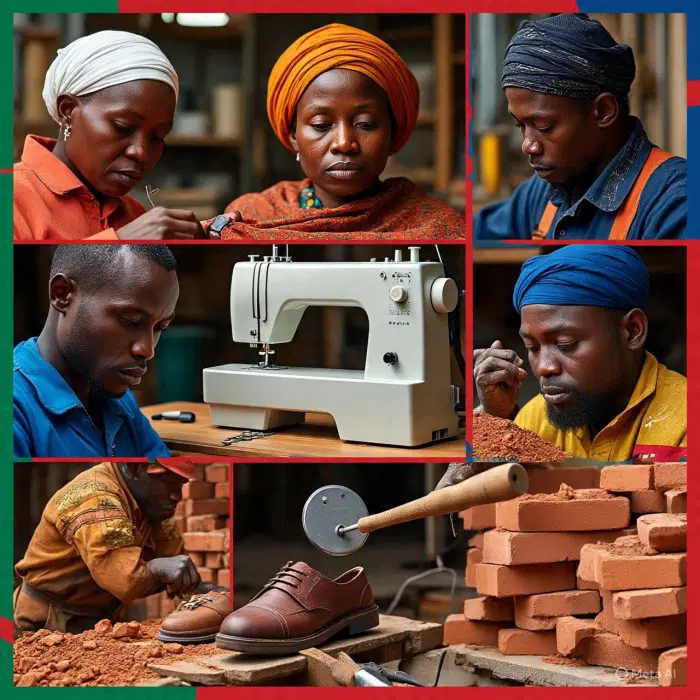
The Lagos State Examinations Board, under the Ministry of Basic and Secondary Education, has announced the official schedule for the 2025 Trade Test, a statewide assessment designed to evaluate the technical competence and craftsmanship of artisans and technicians across various trades.
According to a statement issued by the Director and Registrar of the Lagos State Examinations Board, Mr. Orunsolu Adebayo, the test will be held in two phases — the theory examination on October 18 and the practical test on October 21, 2025.
Adebayo noted that the annual Trade Test remains a critical component in promoting skill certification, improving productivity, and driving employment opportunities across Lagos State.
“The Trade Test remains a vital instrument in enhancing productivity, employment opportunities, and socio-economic development in Lagos State,” Adebayo said.
The 2025 edition will cover a wide range of trades, including tailoring, electrical installation, carpentry, hairdressing, and other vocational skills. The assessment will be structured into three proficiency grades — Grade III, Grade II, and Grade I, to accommodate candidates at different skill levels.
To ensure accessibility and fairness, the Board disclosed that the examination will be conducted simultaneously at four designated centres across the state:
- Government Technical College, Ikotun
- Government Technical College, Epe
- Skill Acquisition Centre, Egbeda
- Lagos State Examinations Board headquarters
Adebayo urged artisans, craftsmen, and technicians to take advantage of the opportunity to gain formal recognition for their skills and enhance their professional credibility.
“We encourage all eligible artisans and technicians to prepare adequately and participate in the 2025 Trade Test. The Lagos State Government remains committed to promoting vocational and technical education as a cornerstone of sustainable development and youth empowerment,” he added.
The Trade Test, introduced decades ago as part of Nigeria’s technical education framework, serves as an official benchmark for validating practical skills and competencies in various vocational sectors. In Lagos, it has evolved into a key initiative supporting the state’s drive for industrial growth and job creation.