By Amafa Ayibabrakemie
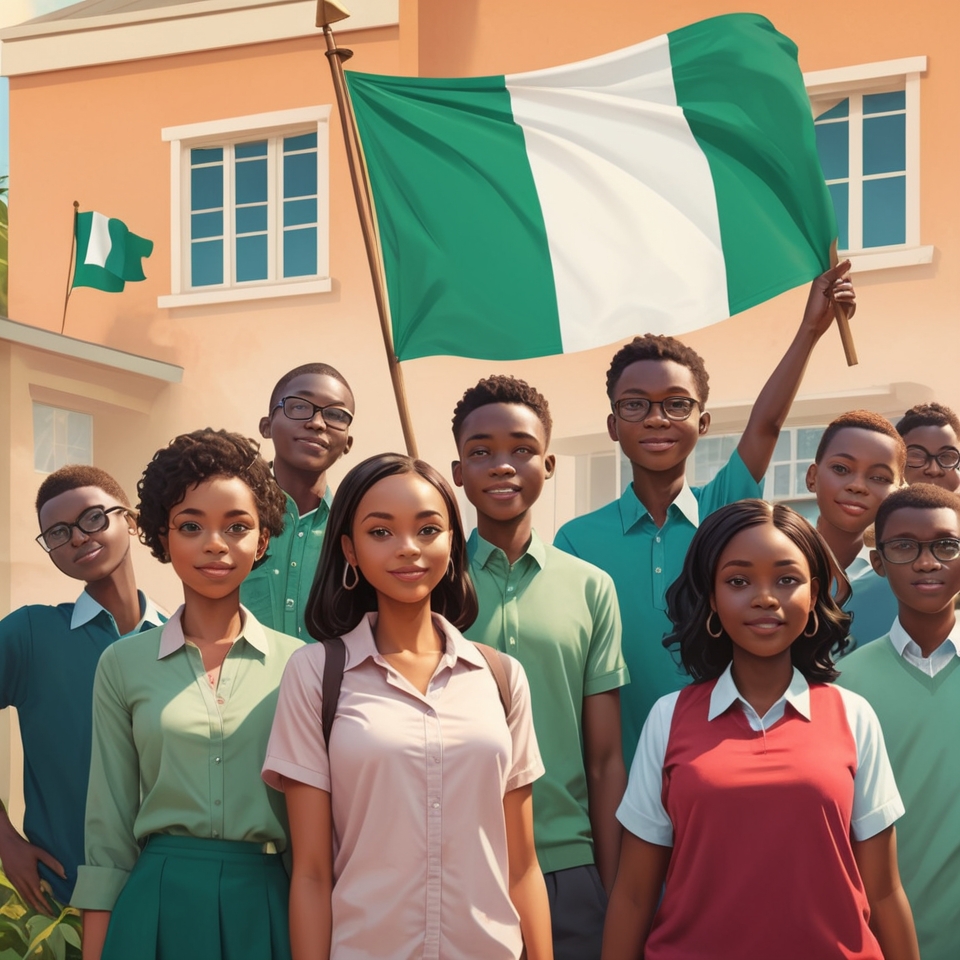
“Daddy and Mummy, I want to become a doctor.”
“That’s my boy! That’s absolutely wonderful!”
The next child said, “I want to become an engineer.”
“Oh, that’s spectacular, my boy. I love that!”
“Daddy, I want to become a journalist.”
The entire room fell into absolute silence. The father asked, “Are you sure?” The mother, looking at him with pity, simply said to herself, “It is well.”
It is no longer news that children who study science-related courses are often perceived as more intelligent than those in other fields. This perception overlooks the fact that other areas of study are equally relevant to career development and societal progress.
It still baffles me how science students are held in such high esteem. Does that really mean that arts students are irrelevant, or should we all begin to pursue science-related courses? Why are arts students treated as though they do not matter in the academic field, except for those studying law?
Here is where the most interesting question comes in: Does your course of study actually have anything to do with your level of intelligence?
Growing up in a family with many siblings, where everyone wants to become something remarkable in life, it can feel as though you are the only one who is not serious when you choose a course of study unrelated to a science profession.
I have always wanted to become a journalist—to be seen on television hosting shows, reading the news for renowned television stations, and researching issues of public interest. But there we go again: parents will always be parents.
“Did you not see your sister and brother choosing law, medicine, engineering and nursing? Why are you bent on wasting our money and effort?”
Little did they know that this is where my passion lies.
Scientists are undoubtedly important. We do not need to argue about that fact. They discover and invent some of the most important things used in our world today. However, they are not the only ones exploring new possibilities. Journalists investigate hidden truths, artists challenge society’s thinking, writers create new worlds, entrepreneurs develop solutions, and people in the humanities help us understand human behaviour and culture.
So, does it really seem as though scientists are the only important and relevant professionals in our world today?
According to Albert Einstein:
“Imagination is more important than knowledge.”
Einstein’s statement reminds us that intelligence is not limited to what one knows. The ability to imagine, question, create and see possibilities differently is also a form of intellectual ability, and these qualities can be found across disciplines.
Imagination and creativity should not be overlooked when a child is deciding what to become in life. Studying science does not automatically make someone more intelligent, just as studying the arts does not make someone less intelligent. Different courses of study require different abilities. It is high time our parents and society understood this.
According to Leonardo da Vinci:
“Learning never exhausts the mind.”
The more you learn, the more understanding you gain and the more you improve.
In conclusion, as Maya Angelou said:
“You can’t use up creativity. The more you use, the more you have.”
Learning never ends. The day you stop learning is the day you stop growing.
Therefore, your field of study should not determine your level of intelligence. Go for the course you truly desire, learn what you need to learn, do your homework properly, and invest in yourself.