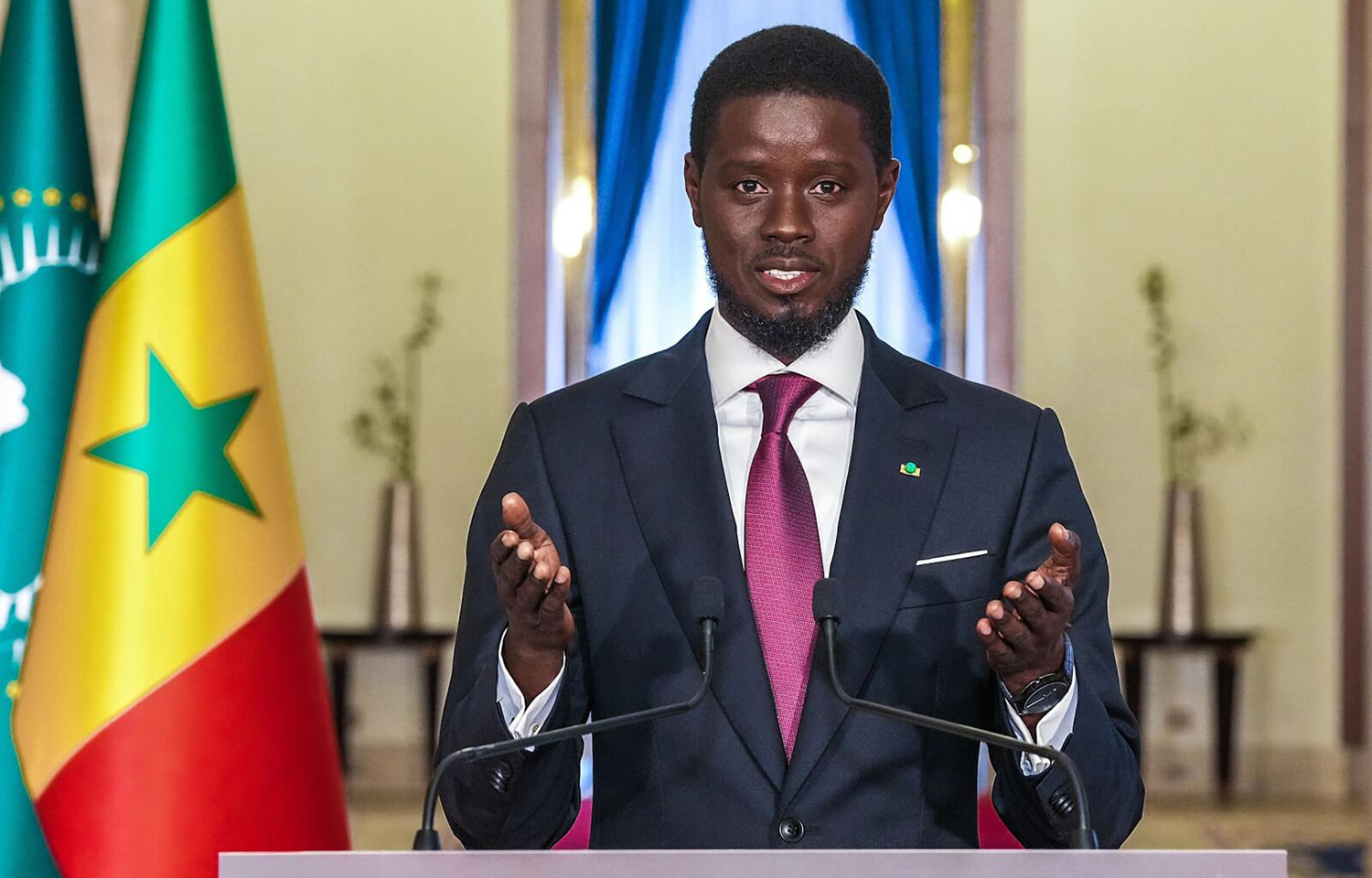
Senegal has entered a new phase of political uncertainty after President Bassirou Diomaye Faye dismissed Prime Minister Ousmane Sonko and dissolved the country’s government following months of escalating tensions between the two longtime allies.
The presidency announced on Friday that all ministers had been relieved of their duties, while the outgoing administration would remain in charge of routine government affairs until a new cabinet is formed. The decision marks a dramatic breakdown in the alliance that swept both leaders to power during Senegal’s 2024 presidential election.
Sonko, a prominent opposition figure with strong backing among young voters, had supported Faye’s presidential bid after being disqualified from contesting the election due to a prior defamation conviction. Their partnership was widely viewed as a symbol of anti-establishment reform and political renewal in Senegal.
However, disagreements over economic management and negotiations with the International Monetary Fund have reportedly widened the divide between the two leaders in recent months.
Following his dismissal, Sonko posted a brief message on social media, saying he would “sleep with a light heart” at his residence in Keur Gorgui, signaling defiance despite his removal from office.
The political fallout comes at a difficult time for Senegal’s economy. The IMF suspended its $1.8 billion lending programme after revelations of previously misreported national debt pushed Senegal’s debt burden to about 132 percent of gross domestic product by the end of 2024.
Before the cabinet dissolution, Finance Minister Cheikh Diba had informed parliament that Senegal hoped to resume negotiations with the IMF in June and reach a fresh agreement before the end of the month. He also warned that rising global oil prices could significantly increase the country’s fuel subsidy costs beyond projected 2026 budget estimates.
Reports indicate Sonko opposed proposals linked to debt restructuring and resisted calls to increase fuel prices, positions that placed him at odds with other officials within the administration.
The dismissal also raises fresh questions about the future of the ruling Pastef party, which controls the National Assembly and remains closely associated with Sonko’s political influence. Analysts say internal divisions within the party could complicate efforts to pass reforms needed to unlock international financial support.
Sonko had earlier warned that Pastef could withdraw from government and return to opposition if the administration strayed from its founding agenda, fueling speculation that the power struggle between him and Faye had become impossible to resolve.
Despite losing the premiership, Sonko remains a powerful political figure in Senegal. Lawmakers recently approved electoral reforms that could clear the path for him to contest the 2029 presidential election.
During his time in office, Sonko championed nationalist economic reforms, including audits of Senegal’s oil, gas, and mining agreements. He had criticized several foreign-backed energy deals as unfair and pushed for renegotiations aimed at lowering domestic energy costs and improving state revenues.
The latest political upheaval now threatens to further delay economic recovery efforts and deepen uncertainty in one of West Africa’s most closely watched democracies.