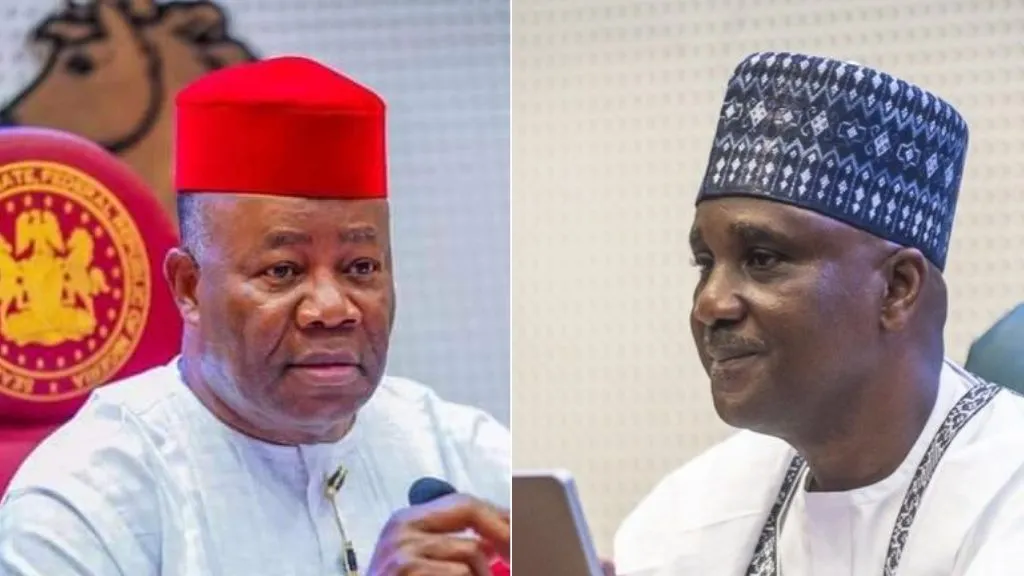
The Socio-Economic Rights and Accountability Project (SERAP) has called on Senate President Godswill Akpabio and House of Representatives Speaker Tajudeen Abbas to publicly account for the alleged mismanagement of ₦18.6 billion earmarked for the construction of the National Assembly Service Commission (NASC) office complex.
In a statement issued on Sunday by its Deputy Director, Kolawole Oluwadare, SERAP urged both presiding officers to explain how the funds were utilized, identify the contractor involved, and publish details of the company’s directors, shareholders, and registered address.
According to the group, the demand follows revelations in the 2022 Annual Audit Report by the Office of the Auditor-General of the Federation (OAuGF), which alleged serious procurement violations and possible diversion of funds within the National Assembly.
The report, released on September 9, 2025, found that the NASC paid ₦11.6 billion to an unidentified construction firm on August 11, 2020, for the “construction of the Commission’s complex within 24 months.” The audit further alleged that the same contract was later inflated by ₦6.9 billion, bringing the total payment to ₦18.6 billion, with another tranche allegedly released on November 29, 2023, for “conversion of the roof garden to office space.”
“The Auditor-General’s report indicates that the contracts were awarded without a Bill of Quantity, needs assessment, competitive bidding, or a Bureau of Public Procurement (BPP) ‘Certificate of No Objection’,” SERAP said. “There was also no approval from the Federal Executive Council (FEC), raising concerns that the funds may have been misappropriated or diverted.”
The civil society organization stressed that the allegations point to “grave violations of the public trust and breaches of both domestic and international anti-corruption obligations.”
“SERAP is concerned that the ₦18.6 billion may have been stolen or diverted. The National Assembly must demonstrate transparency and accountability by explaining the whereabouts of the money, identifying those responsible, and ensuring recovery of any missing funds,” the statement read.
SERAP argued that as the institution charged with oversight of public spending, the National Assembly must lead by example in matters of accountability.
“The National Assembly cannot credibly oversee anti-corruption efforts if it fails to uphold the same standards it demands from other public institutions,” the group added.
The organization gave the National Assembly seven days to respond or face legal action to compel disclosure and investigation of the alleged financial irregularities.
“Failing to act on these allegations would send the wrong message to Nigerians and the international community—that the legislature is unwilling to hold itself accountable,” SERAP said.
The group further urged the Senate and House of Representatives to refer the matter to anti-corruption agencies such as the Economic and Financial Crimes Commission (EFCC) and the Independent Corrupt Practices and Other Related Offences Commission (ICPC) for investigation and possible prosecution.
According to SERAP, “Making public the details of the contractor and accounting for every naira spent would help rebuild citizens’ trust and affirm the legislature’s commitment to transparency and the rule of law.”