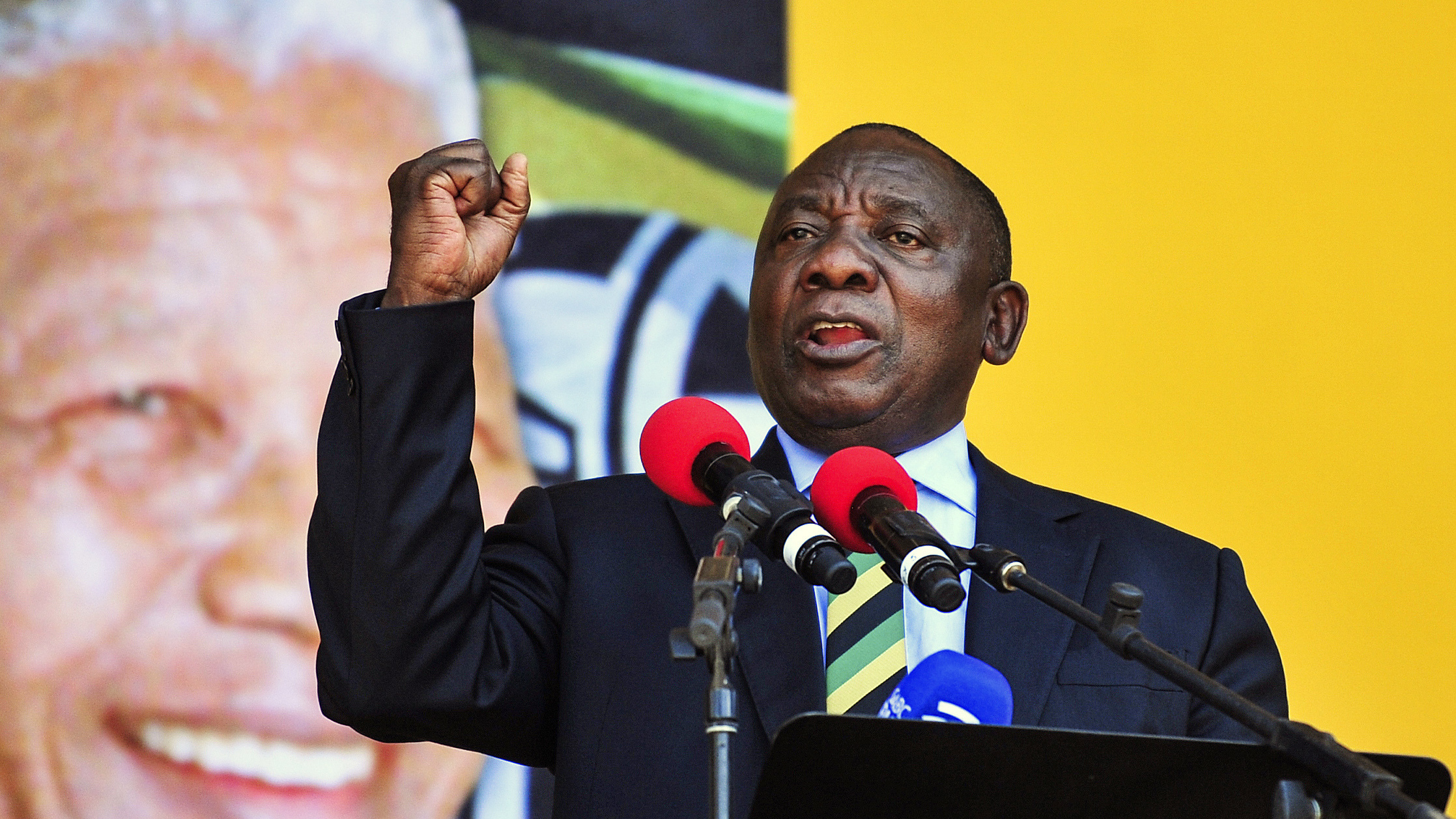
South African President Cyril Ramaphosa has acknowledged growing public concerns over illegal immigration but warned that violence, intimidation and acts of vigilantism will not be tolerated during the nationwide protests scheduled for June 30.
In his weekly newsletter released on Monday, Ramaphosa said citizens have a constitutional right to protest peacefully but stressed that no grievance justifies breaking the law or endangering others.
The president said many South Africans have expressed legitimate concerns over undocumented immigration, weak border controls, pressure on public services and the activities of criminal syndicates exploiting the country’s immigration system.
“These concerns are real and they deserve to be heard,” Ramaphosa said, while emphasizing that the country’s democratic principles require grievances to be addressed through lawful and constitutional means.
He noted that although freedom of expression and peaceful protest are protected under South Africa’s Constitution, such rights do not extend to threats, intimidation, vandalism or violence.
“South Africa is a constitutional republic governed by the rule of law. The exercise of rights by any citizen in a constitutional democracy cannot be determined by intimidation, threats or ultimatums. It must be determined through democratic institutions, evidence and the rule of law,” he stated.
Ramaphosa disclosed that his administration has already accepted the need for significant reforms to the country’s immigration system. These include strengthening border security, tightening enforcement against undocumented immigration, improving the integrity of asylum and visa processes, and tackling corruption that has weakened immigration controls.
He said government remains committed to correcting institutional failures and ensuring that officials found to have enabled illegal immigration through corrupt practices are held accountable.
“We also recognise that where our systems have failed, they must be corrected. Where corruption has enabled illegal immigration, those responsible must be held accountable. Where enforcement has been inadequate, it must improve,” he said.
The president added that his government has consulted widely with traditional leaders, business groups, labour unions, religious organisations and other stakeholders, many of whom support the proposed immigration reforms and government’s commitment to enforcing the law.
Ramaphosa also issued a strong warning against individuals taking immigration enforcement into their own hands, describing such actions as vigilantism that have no place in a constitutional democracy.
According to him, only authorised law enforcement officers have the legal authority to demand identification documents or enforce immigration laws.
He further reminded citizens that many foreign nationals living in South Africa are legally resident, contributing to the country’s economy through employment, education, investment and entrepreneurship, and remain entitled to constitutional protections.
While welcoming assurances from protest organisers that Tuesday’s demonstrations would remain peaceful, Ramaphosa warned that anyone involved in criminal acts would face prosecution.
“Where there is criminal conduct, those responsible will be held accountable and the law will take its course,” he said.
Calling for unity and restraint, the president urged South Africans not to repeat painful chapters of the country’s past marked by discrimination and unlawful identity checks.
He appealed to citizens to protect both national security and constitutional values, saying South Africa can safeguard its borders while respecting human dignity and the rule of law.
The planned protests come after weeks of anti-immigration demonstrations and isolated xenophobic attacks across parts of South Africa, prompting several African countries, including Nigeria, Ghana, Mozambique, Malawi and Zimbabwe, to assist in the evacuation or voluntary repatriation of some of their citizens over growing security concerns.